Vivid Hair Color in Plano: Pastels, Jewel Tones, and What They Actually Take
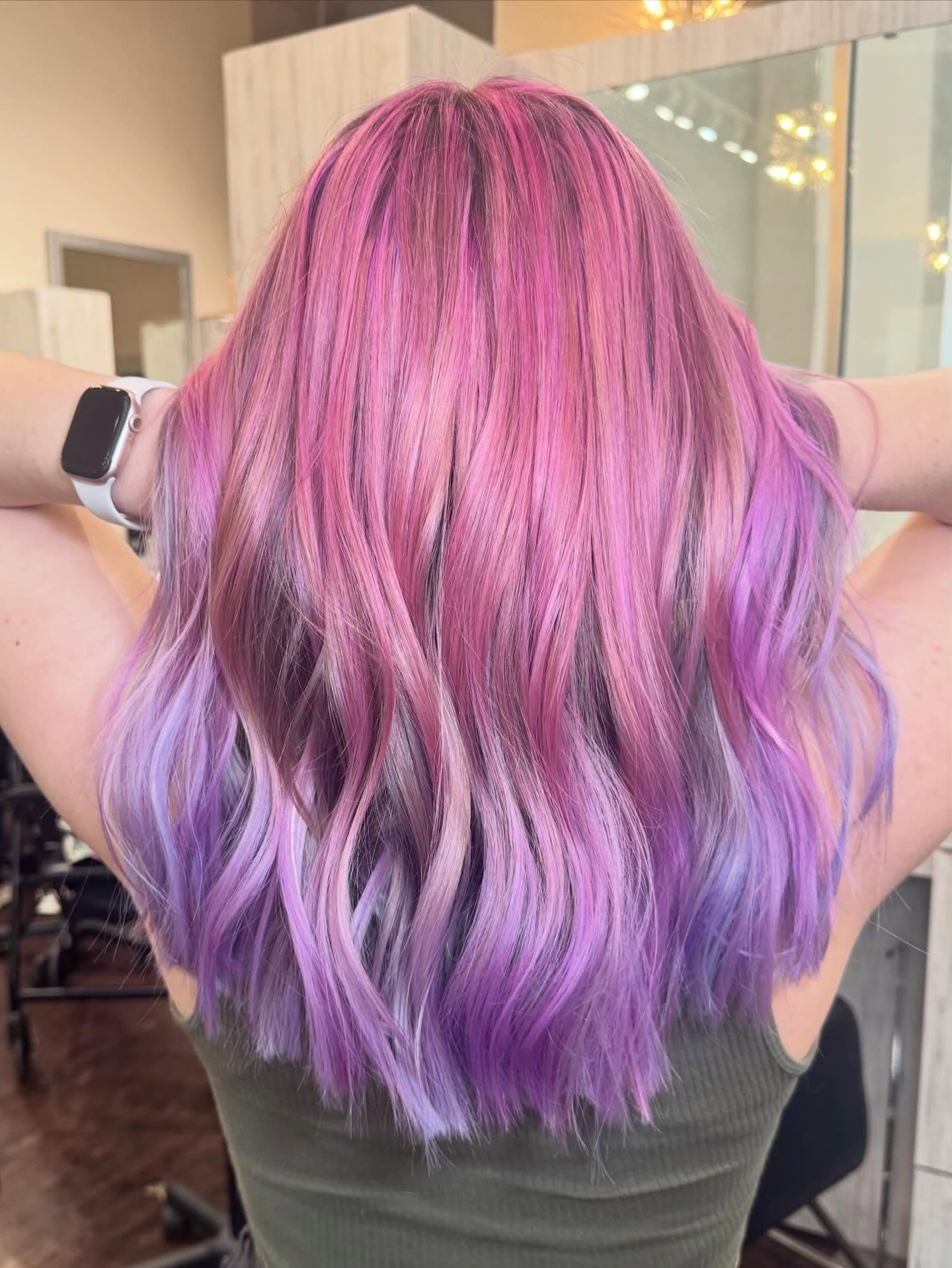
Vivid color is the only thing on our menu priced by the hour, and that is not an accident. A pastel lavender on someone who is already a clean, pale blonde can be finished in an afternoon. The same lavender on dark brown hair that was box-dyed twice last year is a different project entirely, possibly a two-appointment one.
So instead of a flat price that would be wrong for most people, we quote vivids at a consultation. What follows is the part of that conversation we end up having over and over: what vivids actually are, why the lightening matters more than the color does, how long each shade family really lasts, and what happens when you eventually want it out.
What Counts as a Vivid
A vivid, or fashion color, is any shade outside the natural hair spectrum: pink, lavender, teal, emerald, sapphire, silver, copper-orange, rose gold, and everything between.
The chemistry is different from the color most people are used to. Permanent color uses a developer to open the cuticle, lift some of your natural pigment out, and deposit new pigment inside the strand. Vivids are direct dyes — deposit-only. There is no developer and no lift. The pigment goes onto the hair you bring in and sits there, which is why the result depends almost entirely on what color the hair was when the dye was applied.
That single fact explains most of what confuses people about vivids. Purple over yellow-blonde gives you a muddy lavender-beige. Purple over clean pale blonde gives you purple. Same tube, same stylist, completely different outcome.
Vivid Color Starts With a Canvas, Not a Color
Before any vivid goes on, the hair has to be lightened to the right level — and "the right level" changes with the shade you want.
Pastels are the most demanding. A soft rose, a baby blue, a dusty lilac: these need hair lifted to a pale, almost white blonde with no leftover warmth. Any yellow still in the hair will mix with the dye and shift it. Jewel tones are more forgiving. Emerald, sapphire, deep violet, and burgundy can sit on a medium blonde and still read as themselves, because the pigment is dense enough to cover a little underlying warmth.
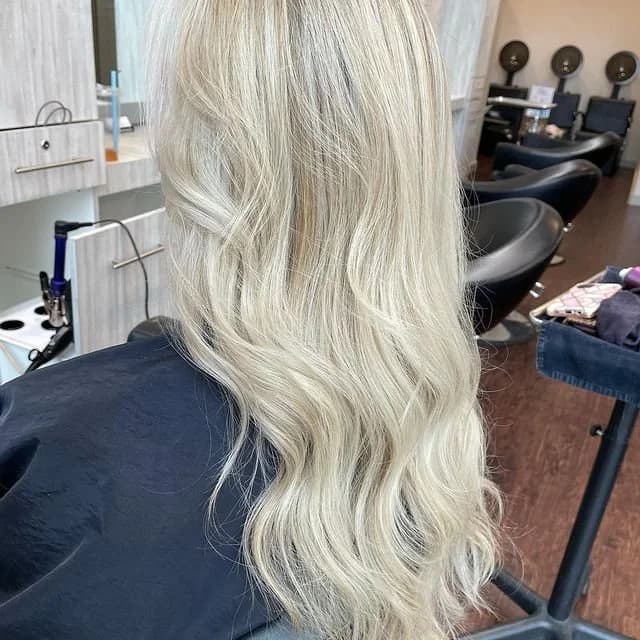
How far your hair is from that base is what determines your appointment. Naturally light hair with no color history might get there in one session. Dark natural hair, or hair carrying old permanent color, box dye, or a black rinse, often cannot get there safely in one sitting — and that is not us being cautious for the sake of it. The American Academy of Dermatology puts it plainly: lightening hair more than three shades "requires higher volumes of peroxide, which causes more hair damage."
When the gap is that wide, we lighten in stages across two or three appointments, with bonding and conditioning treatments in between. You leave the first visit lighter than you came in but not yet at your color. It is slower, it costs more overall, and it is the difference between vivid hair and hair that breaks off at the shoulders. If your hair has existing color that has to come out first, that is a color correction, which is its own conversation.
Why Vivids Are Priced by the Hour
Every other color service on our menu has a starting price attached to a defined amount of work. Full highlights are a full head of foils. A bleach retouch is 30 grams of lightener at the root. Vivids have no fixed shape — the work is however long it takes to get your specific hair to the base your specific color needs, and then to place that color.
So vivids are $100 an hour with our Level 1 and Level 2 stylists and $150 an hour with Levels 3 through 5, and a consultation comes first. At that consultation your colorist looks at your hair's current level, its condition and porosity, what has been on it before, and what you are asking for, then gives you an hour estimate and a number. If it is a multi-session plan, you get the number for the whole plan, not just day one.
Hourly pricing cuts both ways, and mostly in your favor. A partial vivid — a few panels, or color only through the ends — is genuinely cheaper than an all-over, because it is genuinely less work. There is no package you have to buy into.
You Do Not Have to Go All In
Most of the vivid work we do is not a full head of color. It is a panel, a piece, or a hem.
- Peekaboo panels. Color placed on the layers underneath, invisible when your hair is down and bright when it is up or moving. The lowest-commitment version there is, and the easiest to hide for work.
- Face-framing pieces. A vivid version of a money piece — one or two bright sections at the front where you see them every time you look in a mirror.
- Color through the ends only. A vivid take on an ombre. It grows out without a line and can be cut off entirely if you want it gone.
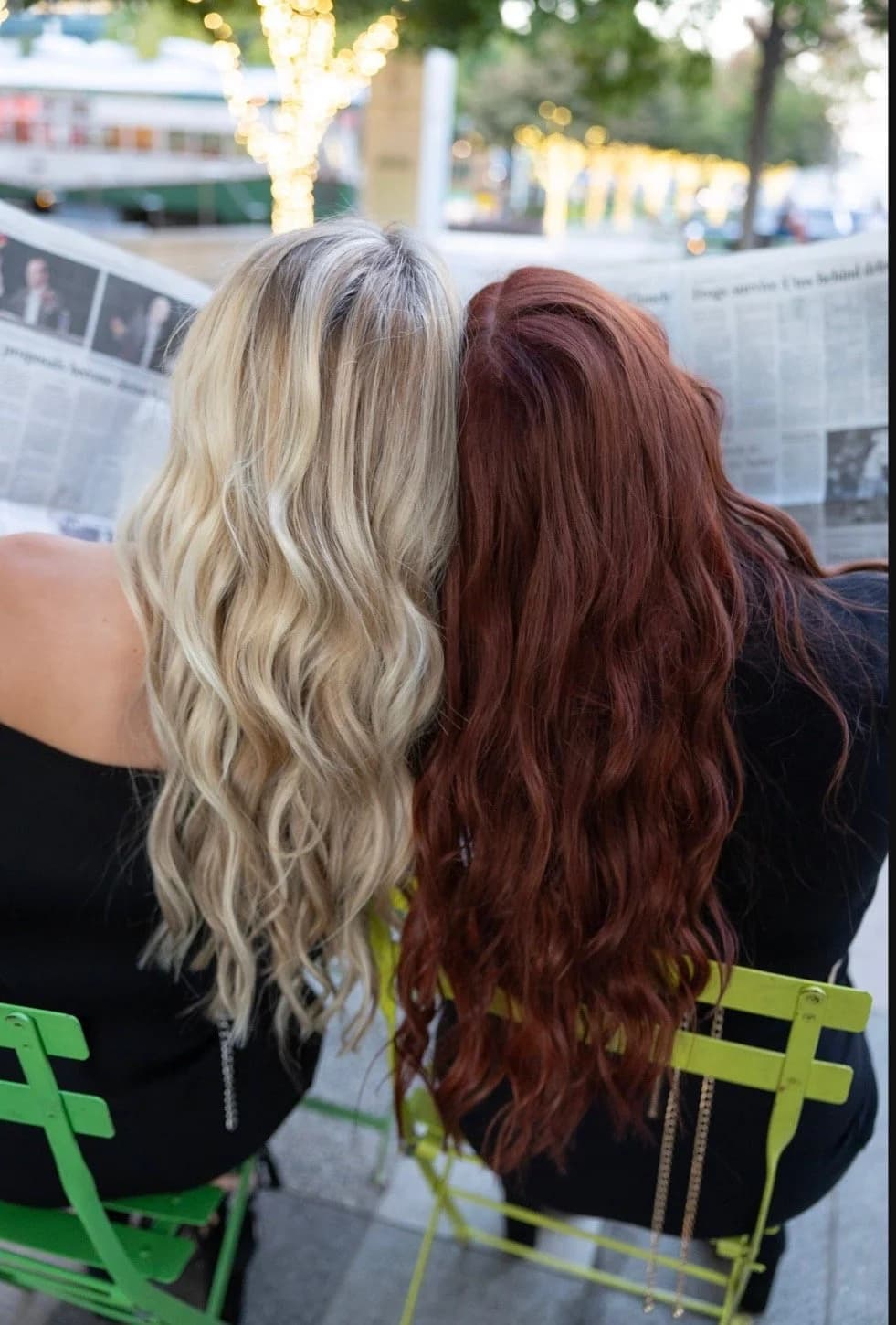
- A melt. Two or three shades blended into each other down the length so there is no hard transition, like the pink-into-lavender at the top of this page.
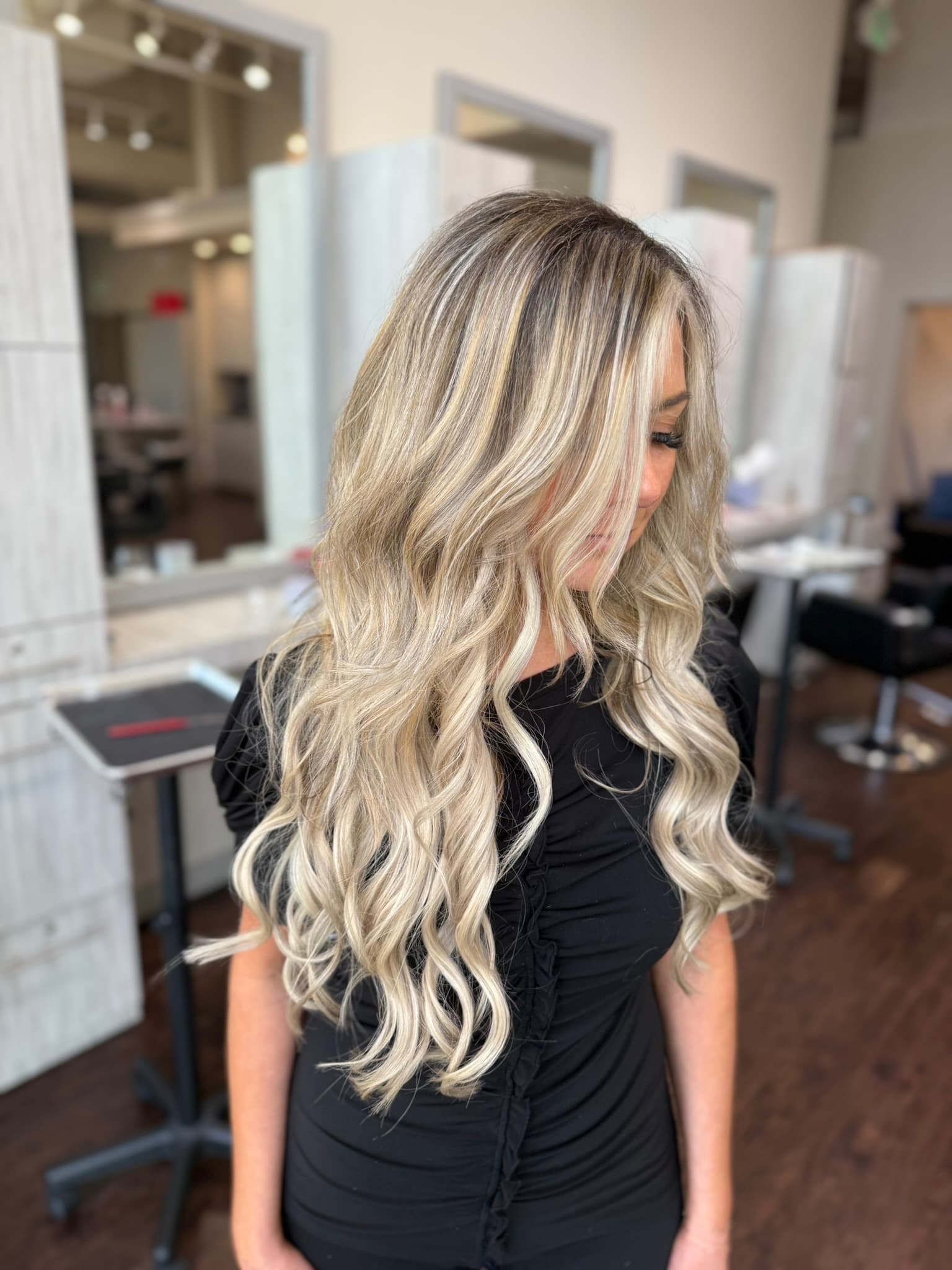
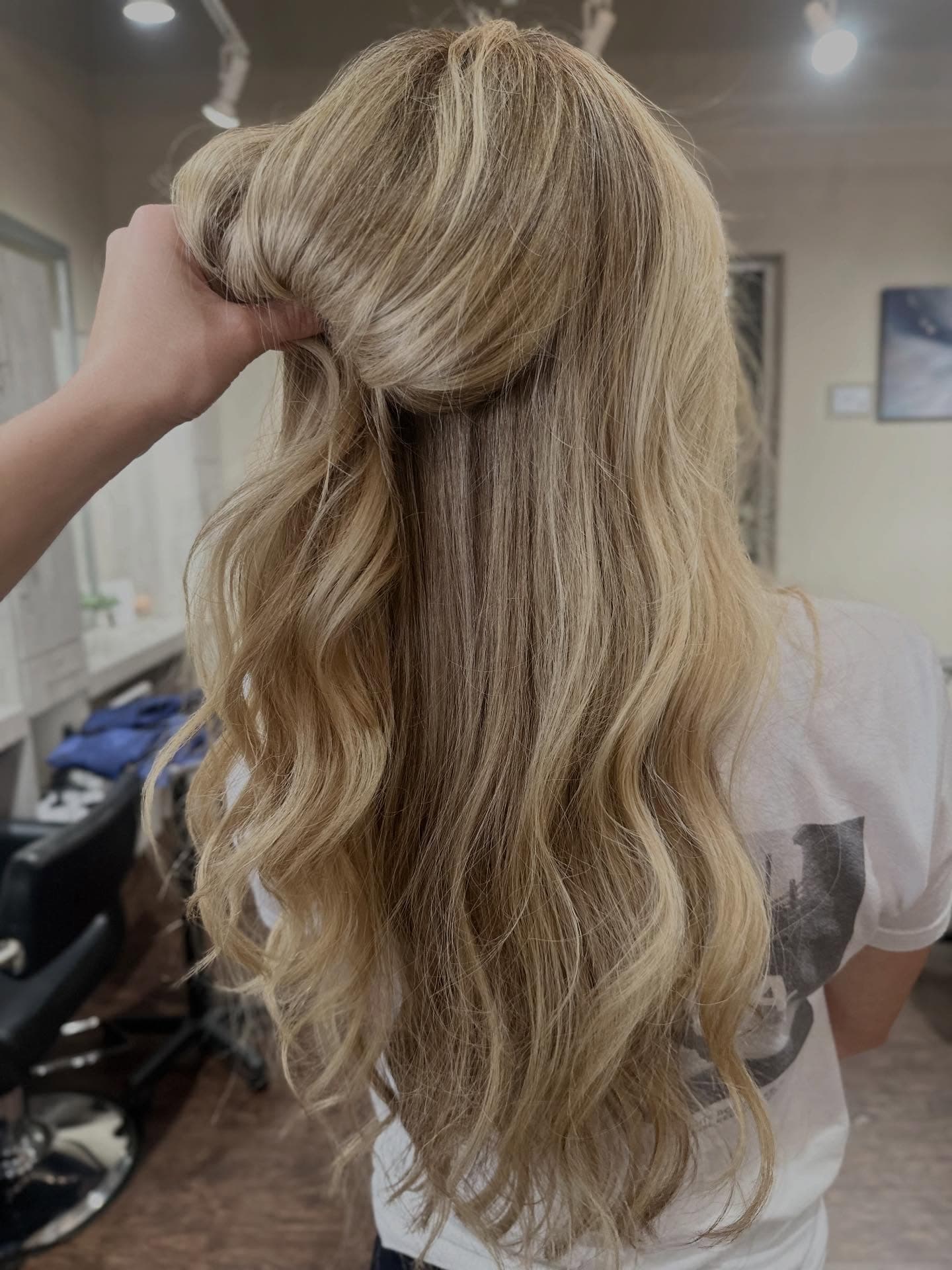
Placed this way, vivid color often reads as a tint rather than a block — visible when the hair moves or when the top layer is lifted, and quiet the rest of the time. If you are not sure how far you want to go, start here. A panel is a cheap, reversible way to find out whether you actually like living with bright hair before you commit a whole head to it.
How Long Vivid Color Actually Lasts
Because the pigment sits on the hair rather than inside it, every wash takes a little with it. That means longevity is counted in washes, not weeks, and it varies enormously by shade family.
| Shade family | What to expect | Realistic refresh |
|---|---|---|
| Pastels (baby pink, lilac, mint, powder blue) | Softens visibly fastest; often fades to a tint within a few weeks | Every 3-4 weeks to stay true |
| Reds, coppers, hot pinks | Hold intensity reasonably well but drift warm and lighter as they go | Every 4-6 weeks |
| Blues, violets, deep greens | The most persistent; fade slowly and unevenly | Every 6-8 weeks |
| Silver and ash tones | Behave like a toner; the first to show returning yellow | Every 3-4 weeks, or a gloss between |
These are ranges, not promises, and the single biggest variable is you. Someone washing every day will go through a pastel in half the time of someone washing twice a week. Hot water, chlorine, and a flat iron on a high setting all speed it up. A pastel that fades is also not usually a problem to fix — the base is already there, so a refresh is a short appointment rather than a repeat of the whole thing.
What Makes Vivid Color Last Longer
None of this is complicated, and all of it matters more for vivids than for any other kind of color.
- Wash less, and wash cooler. This is the whole game. Hot water swells the cuticle and lets pigment out. Two or three washes a week in lukewarm water is the single most effective change most clients make.
- Wait before the first wash. Give the color at least 48 hours to settle before the first shampoo.
- Use color-safe cleansers. Clarifying and detergent-heavy shampoos strip direct dye fast. Our full routine guide for color-treated hair covers what to use and why.
- Turn the heat down. Heat tools accelerate fade, especially on pastels. Use a heat protectant, and use the lowest setting that gets the job done.
- Ask about a color-depositing conditioner. For some shades we can match you to a tinted conditioner that puts a little pigment back every wash. It will not replace a refresh appointment, but it buys weeks.
- Mind the sun and the pool. Chlorine and UV are hard on any color and brutal on vivids. A hat and a rinse before swimming both help.
Going Back Is Its Own Project
This is the part that gets skipped at the consultation and comes up a year later, so we would rather raise it now.
Vivid pigment does not always leave when the color does. Blue and green especially can stay in the hair long after the shade looks washed out, and they will show through anything natural you try to put over them — a warm brown turns muddy, a blonde pulls green. Removing it means lifting it out, which means lightener on hair that has already been lightened once.
It is almost always doable. It is just rarely a single appointment, and it is rarely cheap. If there is a wedding, a new job, or a graduation photo somewhere in the next year, say so at your consultation — it genuinely changes which shade we would recommend. A pastel or a copper is far easier to walk back than a sapphire.
The low-commitment placements help here too. Ends can be cut off. Panels underneath can be covered. A full head of blue cannot.
Is Vivid Color Safe?
The deposit step is the gentle part. There is no developer, no lift, and no peroxide in a direct dye — it is closer to a stain than a chemical process.
Two things are worth knowing anyway. First, hair dye sits in an unusual regulatory position: the FDA states that coal-tar hair dyes, unlike color additives in general, do not need FDA approval, which is why every box carries a caution statement telling you to patch test and warning that the product must never be used on eyelashes or eyebrows. Professional products are not exempt from that reality, which is why we ask about past reactions at consultation and will patch test if there is any history of sensitivity.
Second, the FDA's own consumer guidance is to wait at least 14 days after bleaching, relaxing, or perming before using a dye, and never to dye hair when the scalp is irritated, sunburned, or damaged. That first rule is written for someone stacking two boxes at home days apart with no way to judge what the first one did. In the salon the lightening and the deposit happen in one controlled session because your colorist is assessing the hair in between — and when it does not pass that check, we stop and finish the color at a second appointment instead of pushing through. The scalp rule applies here exactly as written: come in with a sunburned or irritated scalp and we will reschedule the lightening.
What Vivid Color Costs at Lee Graves Salon
| Service | Price |
|---|---|
| Vivids (fashion color) | $100/hr (Levels 1-2), $150/hr (Levels 3-5) — consultation required |
| Bleach Retouch | $180-$220 by stylist level |
| Gloss / Toner (standalone) | $65-$85 by stylist level |
| Full Balayage | $250-$290 by stylist level |
| 30-Second Bonding Treatment | $15 |
| Chroma ID / Bonding with Tone | $40 |
| Luxury Conditioning Treatment | $50 |
Prices are starting rates and a 3% service fee applies to card payments. The full menu is on our pricing page. If your vivid needs lightening sessions first, those are quoted as part of the plan at consultation rather than added as a surprise on the day.
Book a Vivid Color Consultation in Plano
Bring photos. Several of them, including ones you do not like, because knowing what you are trying to avoid is as useful to a colorist as knowing what you want. Tell us your hair's full history too, especially any box dye, henna, or black color, even years ago — it changes what is possible far more than people expect.
Addison on our team has a particular interest in blonding and vivid, fashion-forward color, and every one of our colorists works through the same honest consultation first: what your hair can take, how many sessions it needs, and what it will cost. If the answer is that we should do it in two visits rather than one, we will say so.
You can see real color work from our team in the hair color gallery, and if what you actually want is brightness rather than color, our blonding and lived-in color guide is the better starting point — as is our piece on why blonde hair turns brassy if that has been your experience before.
Call us at (972) 378-0091 or book online, and ask for a vivid consultation so we schedule it properly. We are at 6101 Chapel Hill Blvd, Suite 103, Plano, TX 75093.
Frequently Asked Questions
How much does vivid hair color cost in Plano? Vivids at Lee Graves Salon are priced by the hour rather than by the service: $100 an hour with a Level 1 or Level 2 stylist and $150 an hour with Levels 3 through 5. Hourly pricing exists because the work is unpredictable — a pastel on hair that is already pale blonde is a short appointment, and the same pastel on dark, previously colored hair can take two sessions. A consultation is required so you get a real number before anything starts.
Do I have to bleach my hair for vivid color? Almost always, yes. Vivid color is deposit-only: the pigment sits on whatever color is already there rather than lifting it. Pastels need hair lightened to a pale, clean blonde to read correctly. Jewel tones like emerald, sapphire, and violet can work on a slightly deeper base. True pastels on dark hair are the appointment most likely to need more than one session.
How long does vivid hair color last? It depends almost entirely on the shade. Pastels are the shortest-lived, often noticeably softer in two or three weeks. Reds, coppers, and pinks hold their intensity longer but fade warm. Blues, violets, and greens are the most stubborn, which is good for longevity and inconvenient later if you want them out. Every wash takes some pigment with it, so wash frequency matters more than elapsed time.
Can I go back to my natural color after vivid color? Usually, but it is its own project and it is worth asking about before the first appointment rather than after. Blue and green pigment in particular can stay in the hair long after the vivid has visibly faded and will show through a natural-looking brown or blonde. Going back is typically a color correction, not a single all-over color, and we will tell you honestly at consultation how long it is likely to take.
Will vivid color damage my hair? The vivid itself is the gentle part — direct dyes deposit pigment without a developer. The lightening that comes first is where the risk lives. The American Academy of Dermatology notes that lightening hair more than three shades requires higher volumes of peroxide, which causes more hair damage. That is exactly why we split a big change across sessions when the hair cannot take it in one, and why bonding and conditioning treatments are part of the plan rather than an upsell.
Do you do subtle versions of vivid color? Yes, and they are a large share of what we actually do. Peekaboo panels under the top layer, a single face-framing piece, color only through the ends, or a soft melt that reads as a tint in certain light are all options. They cost less because they take less time, and they are far easier to grow out or cover if you change your mind.
Book a Vivid Color ConsultationProducts for this
color control™
Color Control Light Shampoo
color control™
Color Control Conditioner To Help Fight Color Fade
color control™
Color Control Leave In Treatment Light
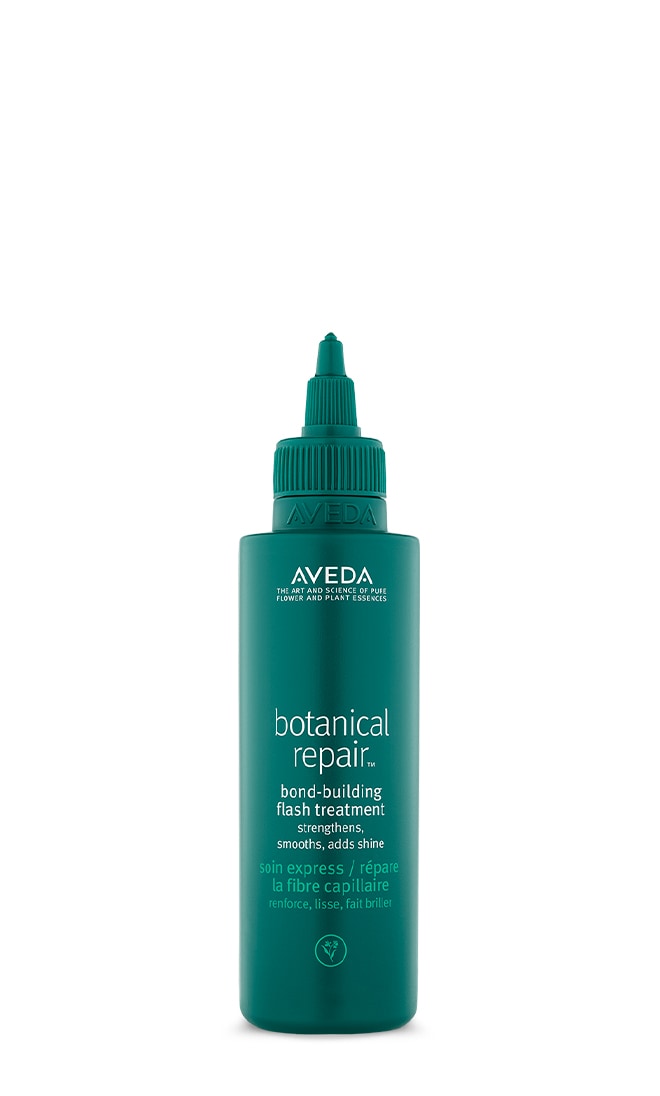
botanical repair™
Botanical Repair Bond Building Flash Treatment
Purchases made through these links support Lee Graves Salon through Aveda's A-Commerce program. Prices shown were checked on 2026-08-20; the current price always appears at aveda.com.
Ready to Get Started?
Book an appointment or call us for a personalized consultation.
Related Articles
Balayage vs Highlights Cost: Which Is More Expensive?
Balayage vs highlights cost, with real Plano prices: what each costs per appointment, what each costs per year, and which one is actually cheaper for you.
Gray Coverage in Plano: Root Touch-Ups, Blending & Your Real Options
Full coverage, gray blending, or a gloss? What each option costs in Plano, how often you'll be back, and how to pick the right shade for gray hair.
Are Highlights More Expensive Than Full Color?
Wondering if highlights cost more than full color? Here's the real price difference, why it exists, and which option is the better value for your hair goals.