Partial vs Full Balayage: Which One Should You Book?
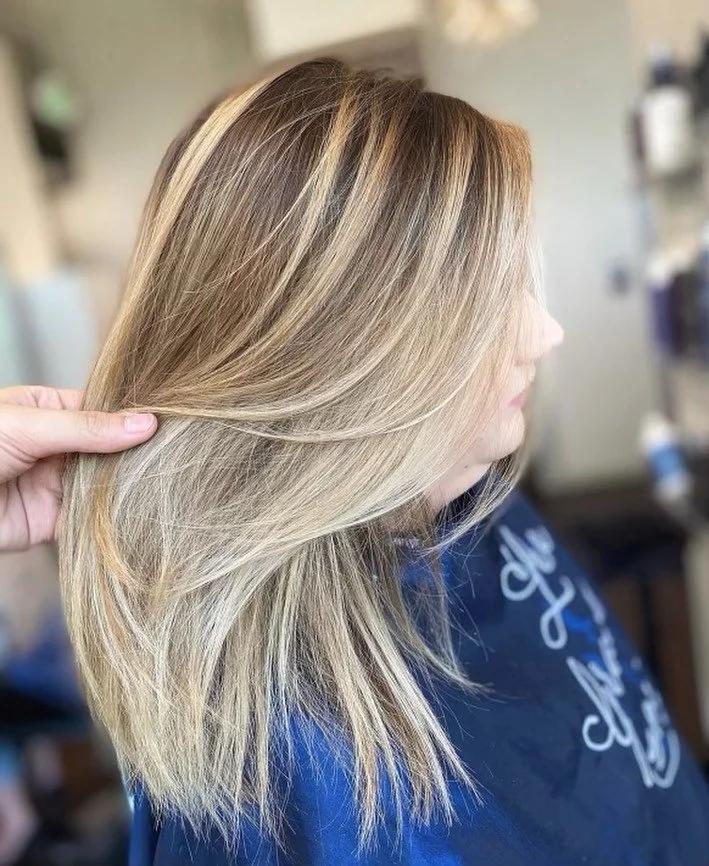
This is the quietest $40 decision on a salon menu, and most people make it from a booking drop-down without anyone explaining what they are choosing between. Partial balayage is $210 to $250 here. Full balayage is $250 to $290. Same technique, same toning included, same three-to-four-month grow-out.
The difference is not that one is "a bit less" than the other. It is that one uses exactly half the lightener of the other, in a specific place on your head — and whether that is the right half depends almost entirely on how you wear your hair.
The Difference Is Measured in Grams
Our menu is unusually specific about this, and it is worth reading literally. Partial Balayage is 45 grams of lightener. Full Balayage is 90 grams. Not "more" — double.
Grams matter because a gram of lightener covers roughly the same amount of hair no matter who is holding the brush. So the number on the menu is the honest spec for how much of your head is getting painted, in a way that words like "partial" and "full" are not.
Where those grams go:
- Partial. The top, the crown, the sides and the face frame — the sections that sit on the outside when your hair is down. Your colorist works the surface layer and the pieces around your face, and leaves the back and the under-layers at your natural depth.
- Full. All of the above, plus the back and the layers underneath. The color is painted through the whole head, so there is no section of your hair that stays at its original level.
Everything else about the two services is identical. Both are hand-painted rather than foiled, both keep the lightener off the scalp, and both finish with a root smudge and a gloss that are already in the price. Our balayage service page covers the technique itself if you have never had it done.
The Question That Actually Decides It
Not your budget. Not your hair color. This one: do you wear your hair down and forward, or up and back?
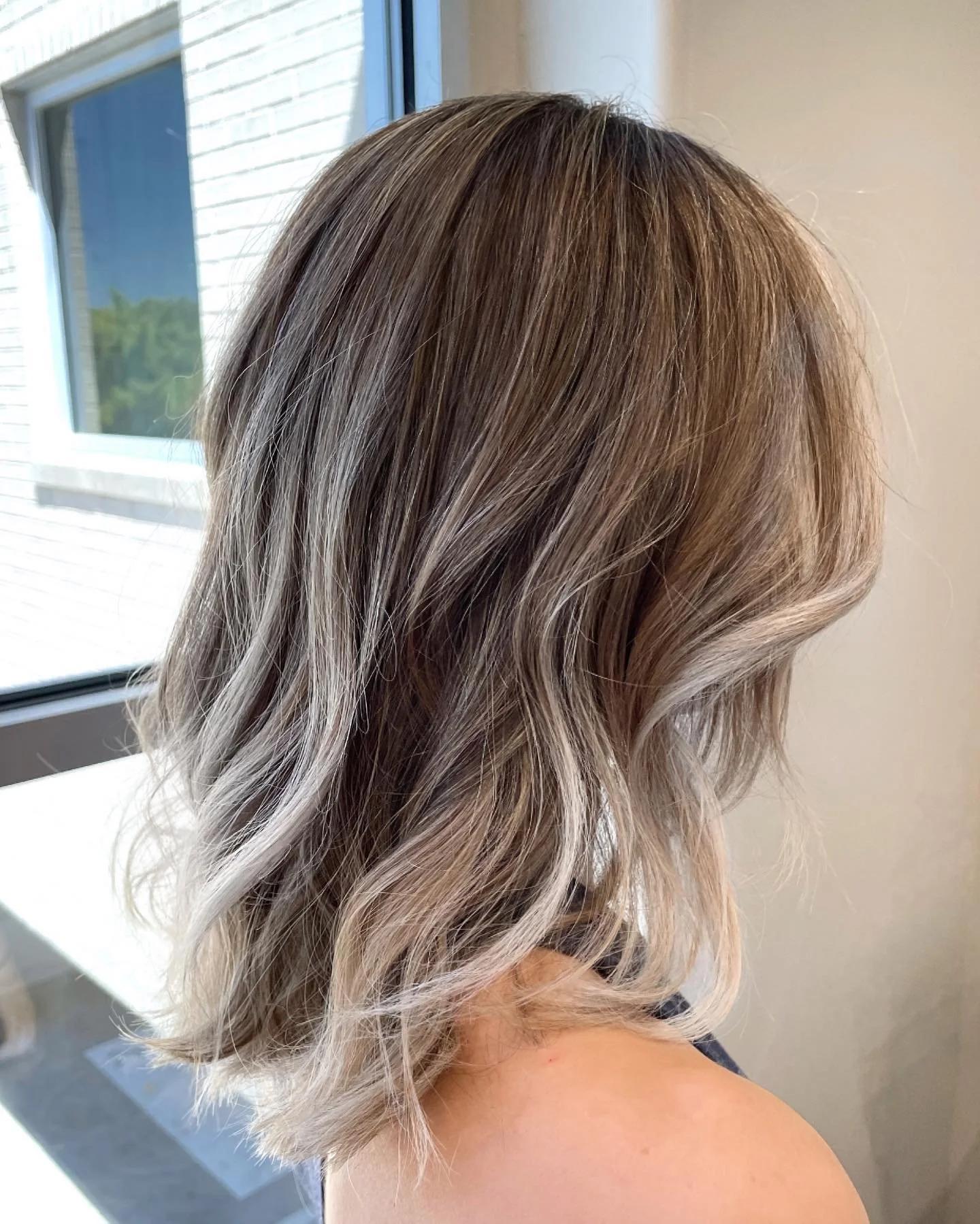
A partial is painted for hair worn down. Looking in the mirror, or in a photo taken from the front, you see the painted sections and almost nothing else — which is why a good partial can look every bit as bright as a full in the chair. Put that same hair in a ponytail, a bun or a half-up, and the under-layer that comes to the surface is your natural base. Some people love that contrast. Others feel like the color disappeared.
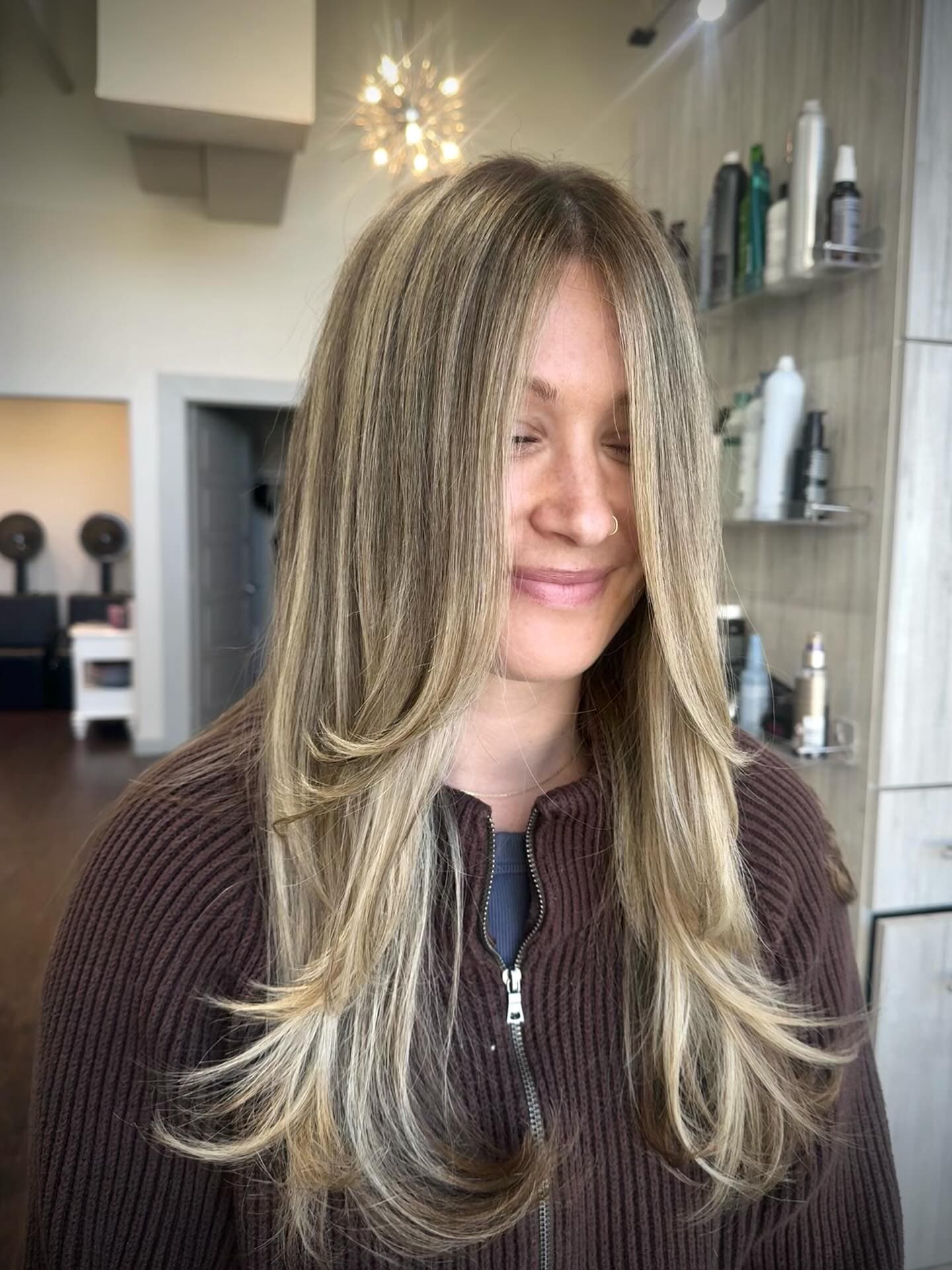
A full is painted so the hair reads light from every angle. Up, down, moving, from behind, in the wind on a patio in July. If you tie your hair back most days, or you have a lot of layers that let the under-side show, the back half of your head is not a detail — it is most of what other people see.
Side by Side
| Partial Balayage | Full Balayage | |
|---|---|---|
| Price (by stylist level 1-5) | $210 – $250 | $250 – $290 |
| Lightener | 45g | 90g |
| Time in the chair | about 2 hours | 2.5 – 3 hours |
| Where it is painted | top, crown, sides, face frame | whole head, including the back and under-layers |
| Reads brightest | hair down, from the front | every angle, up or down |
| Root smudge, gloss and tone | included | included |
| Refresh cadence | every 3 – 4 months | every 3 – 4 months |
Two notes on that table. The toning line is the one most worth checking against any other salon you are comparing — a quote that looks $30 cheaper often adds the gloss separately at checkout. And very long or very dense hair needs more than the standard amount of lightener in either service, which moves the quote; that is a number you get at the consultation looking at your actual hair, not over the phone. The complete menu is on our pricing page, and the highlights pricing breakdown explains everything that pushes a color quote above its starting rate.
Book a Partial If
- You want to look brighter around the face, not blonder overall. This is the single most common reason a partial is the right call, and it is not a compromise — it is a different result.
- You are going lighter for the first time. A partial is a low-commitment way to find out whether you actually like the brightness before you commit the whole head to it.
- Your base is dark and you want dimension rather than blonde. Caramel or honey movement through the top on a brunette is a partial's best work.
- You wear your hair down most days. If the under-layer rarely sees daylight, you are paying for hair nobody looks at.
- You want the shorter appointment. Two hours against three is a real difference on a weekday.
Book a Full If
- You wear your hair up. Ponytails, buns, half-up styles and heavily layered cuts all bring the under-layer to the surface.
- You want to be noticeably lighter, not just brighter in places. A full is the service that changes how light your hair reads overall.
- You are working toward a lived-in blonde over several sessions. Staged lifting needs the whole head moving together, or the sections fall out of step. Our guide to blonding and lived-in color covers how a multi-session plan is built.
- Your hair is long or dense. The more hair you have, the more of it hides under the top layer, and the less a 45-gram partial shows.
- Your last few partials have left a visible line between the top and the underneath. More on that next, because it is the most expensive mistake in this whole decision.
When the Cheaper Booking Costs More
Here is the pattern we see most often, and it almost always starts as a sensible budget decision.
A client books a partial, likes it, and books another partial three months later. Then another. Each appointment brightens the same top sections, because that is what a partial does — so after three or four rounds the surface of the hair is several levels lighter than the layers beneath it, which have never been touched. Worn down it still looks fine. Tied up, or in any wind, there is a hard contrast between a light top and a dark underneath that nobody designed and nobody wants.
Getting out of it is a full balayage, and often a full plus corrective work to even up the two levels, because the gap has been widening for a year. That is a bigger number than the $40 a visit the partials were saving.
The honest rule is simple: if what you actually want is to be lighter overall, the full is the cheaper route over a year, not the more expensive one. A partial is the right booking when brightness around the face is the goal in itself — not when it is a smaller version of a result you are hoping to reach eventually.
The mistake runs the other way too. If your ends are already as light as they should go and you just want the tone reset, neither service is what you need — a standalone gloss at $65 to $85 will do it for a third of the price and half the chair time.
One scheduling detail that trips people up: you usually cannot upgrade from a partial to a full once you are in the chair. Stylists are booked by time, not by service, so a two-hour partial slot rarely has an extra hour hiding in it. Decide at booking. If you are genuinely torn, book the full — a colorist can always paint less, but they cannot invent the time to paint more.
And if your goal is a significant lift from a dark base, expect it to be staged. The American Academy of Dermatology notes that lightening hair more than three shades requires higher volumes of peroxide, which causes more hair damage, which is why a colorist worth sitting with spreads a big change across appointments rather than chasing a photo in one sitting.
What Each Costs Over a Year
Both services are refreshed on the same three-to-four-month cycle, so the annual comparison is clean.
| Partial Balayage | Full Balayage | |
|---|---|---|
| 3 appointments a year | $630 – $750 | $750 – $870 |
| 4 appointments a year | $840 – $1,000 | $1,000 – $1,160 |
| Plus a gloss between visits | $65 – $85 each | $65 – $85 each |
The gap is $120 to $160 a year — about one gloss, or one dinner out. That is the number to weigh against the risk of needing corrective work later, and it is also why the alternating rotation works so well: one full a year to reset the back and the under-layers, partials in between to keep the face frame bright. If you want the wider cost picture, balayage versus highlights cost runs the annual totals against foil work, and highlights versus full color cost compares dimensional color to single-process.
How to Ask for What You Want
Saying "partial" or "full" at the consultation is the least useful thing you can say, because those are billing categories rather than descriptions of a result. Four things that are worth saying instead:
- How you wear it. "It is up four days a week" changes the recommendation more than any photo will.
- Bring two photos. One of the brightness you want, and one of hair that is roughly the same starting depth as yours. A blonde goal photo on a base three levels lighter than yours is the most common source of a disappointing appointment.
- Where you want to see it. "Brighter around my face" and "lighter all over" are two different services, and naming which one you mean settles the partial-versus-full question in a sentence.
- How often you can realistically come in. Three visits a year and five visits a year are designed differently. Placement kept slightly softer and lower at the root stretches further.
If you are still choosing a colorist rather than a service, how to choose a balayage colorist in Plano lays out the questions worth asking any salon, including ours, and what to expect at your first balayage walks through the appointment start to finish. Between visits, how long balayage lasts covers the maintenance that keeps either version looking like it did on day one.
Frequently Asked Questions
How much is partial balayage vs full balayage? At Lee Graves Salon in Plano, partial balayage runs $210 to $250 and full balayage $250 to $290, set by your stylist's level from 1 to 5. It is a $40 gap at every level. Both prices already include the root smudge, the gloss and the tone rather than adding them at checkout, so the two services are directly comparable to each other in a way that quotes from two different salons often are not.
What is the actual difference between a partial and a full balayage? The amount of lightener and where it goes. Our menu is specific about it: a partial is 45 grams, a full is 90 grams — exactly double. A partial is painted through the top, crown, sides and face frame, which is the hair that shows when you wear it down. A full adds the back and the layers underneath, so the color reads light from every angle, including when your hair is up.
Can I upgrade from a partial to a full during my appointment? Usually not, and it is worth knowing why before you book. Stylists schedule by time rather than by service, and a partial is about two hours against two and a half to three for a full. A partial slot often cannot absorb the extra hour, so the upgrade has to be decided at booking or at the consultation, not at the shampoo bowl. If you are genuinely unsure, book the full and let your colorist paint less — that direction works; the other one usually does not.
Is partial balayage enough for dark hair? It depends on what you want the result to do. On a dark base, a partial reads as dimension and brightness around the face rather than as being blonde, and for a lot of clients that is exactly right. If the goal is to look lighter overall, a partial on dark hair is usually the service people are disappointed by, because the untouched under-layer stays dark and shows every time the hair moves. That is a full, and often across more than one session.
Does a partial balayage grow out differently than a full? No. Both are hand-painted with the brightness kept off the scalp and finished with a root smudge, so neither one creates the hard regrowth line that foils do, and both hold their shape for three to four months. The grow-out is the one thing partial and full balayage have genuinely in common.
Can I alternate partial and full balayage? Yes, and for a lot of clients it is the smartest rotation on the menu. A full once a year to reset the back and the under-layers, with partials in between to keep the face frame bright, costs less than four fulls and avoids the light-top, dark-underneath contrast that repeated partials build on their own. Tell your colorist that is the plan so the placement is designed for it.
Sources: American Academy of Dermatology, Coloring and perming tips for healthier-looking hair (lightening more than three shades requires higher volumes of peroxide and causes more hair damage). Prices and lightener weights quoted are from the Lee Graves Salon pricing menu and vary by stylist level, hair length and density.
Products for this
color control™
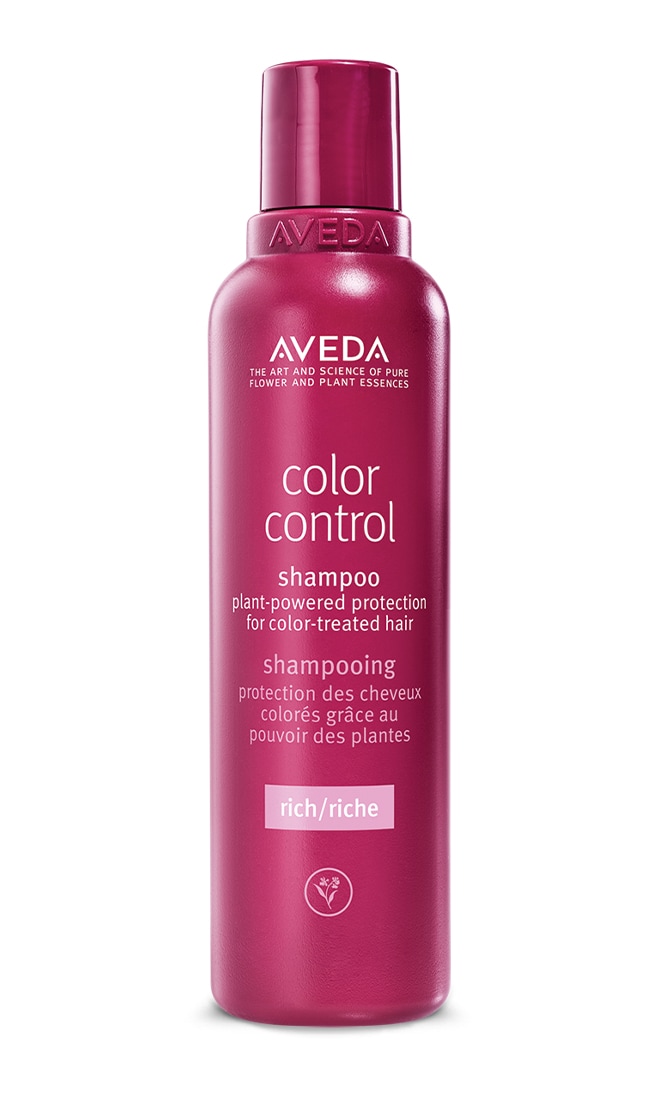
Color Control Rich Shampoo
Blue Malva Color Conditioner for Silver and Blonde Tones
color control™
Color Control Leave In Treatment Light
sun care
Sun Care Protective Hair Veil Uv Defense
Purchases made through these links support Lee Graves Salon through Aveda's A-Commerce program. Prices shown were checked on 2026-08-20; the current price always appears at aveda.com.
Ready to Get Started?
Book an appointment or call us for a personalized consultation.
Related Articles
Hair Color in Allen, TX: Root Touch-Ups, Gray Coverage, and the Half-Inch Rule
What hair color costs for Allen clients seven miles from the salon, why a root touch-up is priced for half an inch of grow-out, and how to keep repeated color from flattening your ends.
Balayage in McKinney, TX: Cost, Trip Count, and Coming Off Foils
What balayage costs for McKinney clients, why painted color means four trips a year instead of nine, and how to move off a foil highlight cycle without a hard line.
How Much Does a Hair Gloss Cost in Plano, TX? (2026 Price Guide)
What a hair gloss and toner cost in Plano, why the price has a range, what a year of glossing actually adds up to, and the three times booking a gloss is the wrong call.