Transitioning to Gray Hair in Plano: Timeline, Routes, and Real Costs
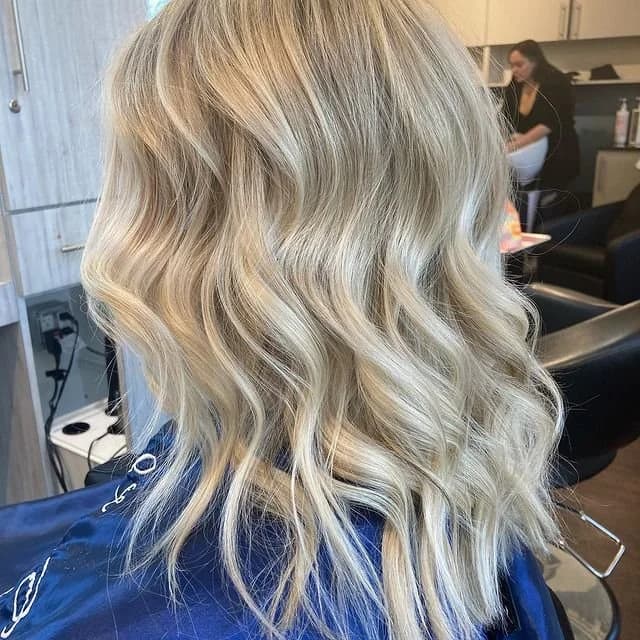
Deciding to stop coloring your gray is the easy part. The hard part is the twelve to twenty-four months in the middle, and almost nothing written about going gray tells you how long that middle actually lasts or what it costs to get through it well.
So here is the honest version: the timeline, the three routes clients in Plano actually take, what each one costs off our menu, and the specific things that make the in-between look deliberate instead of neglected.
First, the Math Nobody Runs for You
Your transition length is not set by how gray you are. It is set by how much colored hair you are willing to lose.
Healthy hair grows roughly half an inch a month. The National Library of Medicine's MedlinePlus puts it plainly: "It takes about a month for healthy hair to grow half an inch." That one number controls the whole calendar.
| Colored length you want gone | Growing it out completely |
|---|---|
| 2 to 3 inches (pixie or crop) | 4 to 6 months |
| 6 inches (chin-length bob) | About 12 months |
| 10 to 12 inches (shoulder) | 20 to 24 months |
| 16 to 18 inches (mid-back) | 32 to 36 months |
Almost nobody waits out the full number, because colored ends come off at regular trims along the way. But the table is the reason an honest consultation starts with scissors, not color. If a two-year calendar is unacceptable and so is cutting, there is no third option that makes the colored length disappear faster.
What Actually Looks Bad Is the Line, Not the Gray
Clients describe the awkward stage as "looking gray." That is rarely what is bothering them. Two specific things are:
The demarcation line. A hard horizontal edge where colored hair stops and natural hair starts. Permanent color creates the cleanest, most obvious version of it, and it gets more noticeable as it widens, not less.
The tone mismatch. Old permanent color oxidizes and fades warm, toward brassy gold or red, while incoming gray is cool and neutral. Even without a sharp line, those two tones sitting next to each other read as a mistake rather than a choice.
Both are fixable. The gray is not a problem to be fixed, and on that the American Academy of Dermatology is unambiguous: "Gray hair is a normal part of aging, and there is nothing wrong with having gray hair." Hair turns gray, the AAD explains, "when your hair follicles stop creating melanin," usually starting "in your 30s-40s," and largely on a schedule your parents set — "if your parents' hair turned gray early, your hair might, too."
Route 1: Blending (What Most Clients Choose)
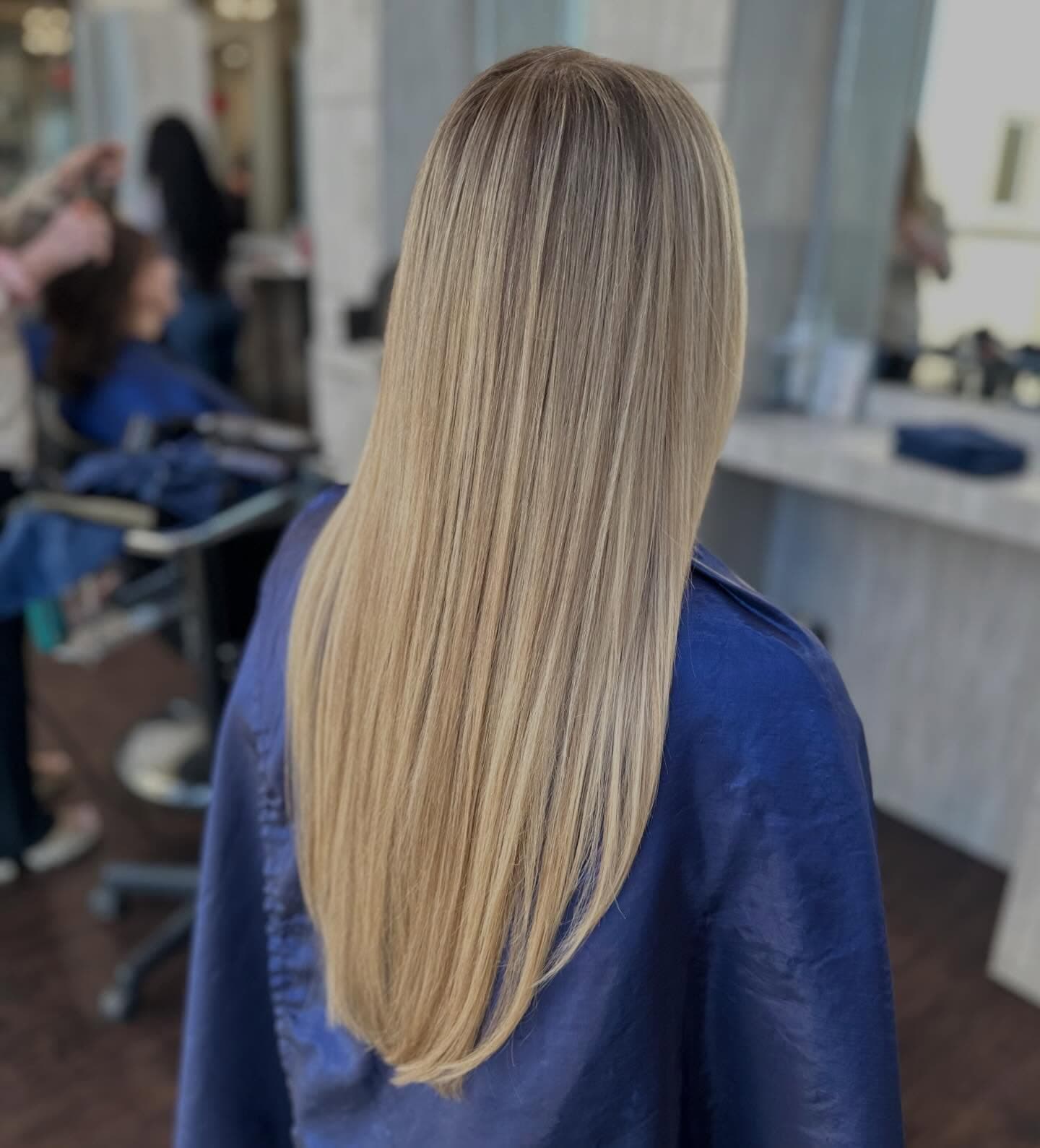
Instead of covering the gray or waiting it out, your colorist weaves fine highlights and lowlights through the incoming silver so the line never forms. The grays stop reading as regrowth and start reading as dimension.
Technically it is foil work, usually babylights or fine highlights, with lowlights dropped in to keep depth so the result does not go flat and washed out. On the first appointment the goal is usually to soften the existing line and pull some brightness up toward the root. On the next one, six to twelve weeks later, your colorist moves the weave closer to your natural pattern. Repeat two or three more times and the colored hair has quietly become the minority without a single dramatic day.
What it costs here: Partial Highlights run $190 to $230 and Full Highlights $220 to $260, depending on your stylist's level. A gloss or toner at $65 to $85 is usually added to keep the whole thing cohesive. Face-framing Illumination, at $100 to $120, is a smaller way to keep the front looking intentional between bigger appointments.
Rebooking: every eight to twelve weeks. That is the quiet advantage over full coverage, which pulls you back every four to six. Our gray coverage guide lays those two cadences side by side if you are still deciding whether to grow it out at all.
Best for: most people, especially anyone with hair past the shoulders, anyone between about 30 and 70 percent gray, and anyone who wants the transition to be invisible to coworkers.
Route 2: Cut It Shorter
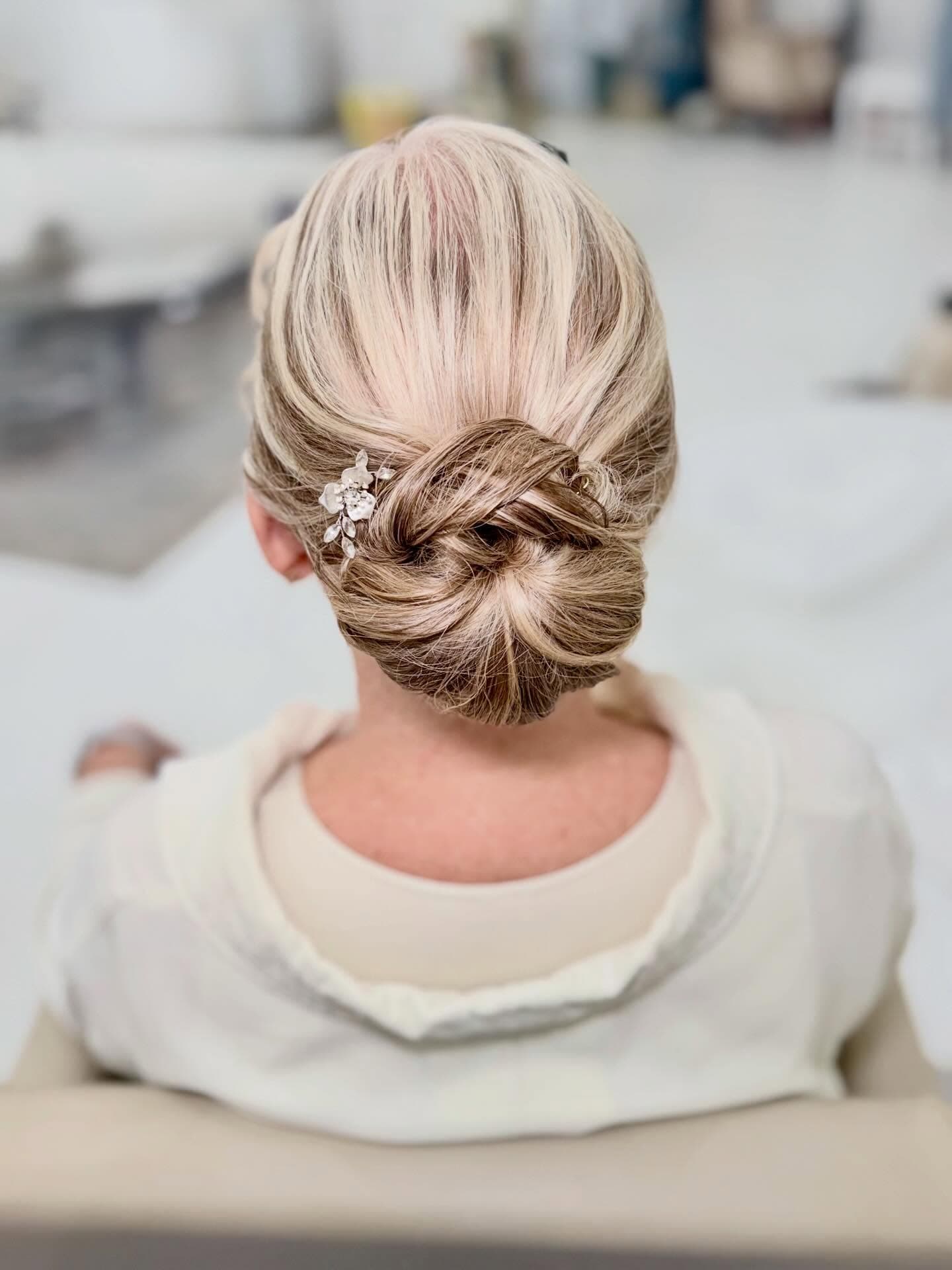
The fastest route is also the least technical. Less colored length means less time, and nothing else on this page changes the calendar as much as a pair of shears.
Taking shoulder-length hair to a chin-length bob removes roughly four to six inches of colored hair in one appointment, which is eight to twelve months off the back end of your transition. A shorter cut also carries gray better in the first place, because the texture change that often comes with graying — coarser, wirier, more irregular — behaves better with less weight hanging off it.
This does not have to be a single dramatic chop. A lot of clients take two inches at a time every six to eight weeks and arrive at a bob gradually, which also lets them change their mind.
What it costs here: a Women's Haircut & Style is $93 to $112 by stylist level. Our Signature Haircut & Style at $148 to $168 includes a conditioning treatment and a gloss, which is worth knowing about because it bundles the two things transitioning hair needs most. Full details are on our haircuts page and the pricing menu.
Best for: anyone open to a shape change, anyone who wants this finished inside a year, and anyone whose colored ends are damaged enough that keeping them was never the plan.
Route 3: Cold Turkey, With a Gloss
Stop coloring, let it grow, trim the ends down over time. It is a perfectly legitimate route and more clients pick it every year — but the version that works and the version that does not are separated by one service.
The version that does not work is doing nothing at all. The line sits there for months and the incoming silver goes yellow because nobody is toning it.
The version that works pairs the grow-out with a demi-permanent gloss every six to eight weeks. A gloss deposits translucent cool tone with no lightener and no hard line of its own, so it softens the contrast between old color and new growth, cancels the yellow on the incoming gray, and puts shine back into hair that has gone matte. It fades out rather than growing out, which is exactly what you want mid-transition.
What it costs here: a Gloss/Toner is $65 to $85, covering 60 grams of product, with an additional $10 per extra 30 grams for longer or denser hair.
Best for: shorter hair, patient people, and anyone already at heavy gray, where the incoming color is bright enough that the contrast reads as a choice early on.
Which Route Fits You
| If this is true | Start here |
|---|---|
| Your hair is past your shoulders and you want to keep the length | Blending |
| You want to be done inside a year | Cut shorter, then gloss |
| You are already mostly gray and your hair is short | Cold turkey with a gloss |
| Nobody at work should be able to tell this is happening | Blending |
| Your colored ends are dry, faded or breaking | Cut shorter |
| You want zero visible silver after all | This is gray coverage, not a transition |
Most real transitions use two of these at once. The common combination is a shorter cut to shorten the calendar, blending foils to erase the line, and a gloss between appointments to hold the tone.
What a Full Transition Actually Costs
Year-one numbers, built from the menu prices above so you can budget instead of guess. The assumptions are in the table, because that is where every salon cost estimate either holds up or falls apart:
| Route | What year one looks like | Year-one range |
|---|---|---|
| Blending | 3 to 4 foil appointments plus 2 to 3 glosses between | $700 to $1,300 |
| Cut and gloss | 6 to 8 haircuts plus 4 to 6 glosses | $820 to $1,400 |
| Cold turkey with gloss | 6 to 8 glosses plus 2 to 3 trims | $580 to $1,020 |
Low ends assume a Level 1 stylist and the lighter visit count; high ends assume Level 5 and the heavier one. For comparison, staying on full gray coverage is a Root Touch-Up at $90 to $110 every four to six weeks — nine to thirteen appointments a year, or $810 to $1,430 — and it never stops. That is the part worth sitting with: a transition has a finish line and coverage does not. One note on payment: a 3% service fee applies when using a card reader, and there is no fee for cash or check.
Getting Through the In-Between
Six to eighteen months is a long time to live with hair in motion. Three things keep it looking deliberate.
Tone control. Incoming silver yellows easily, and Plano makes that worse. North Texas water is hard, and the minerals it carries deposit on hair and oxidize into a yellow-orange cast — the same chemistry behind blonde hair turning brassy, with no pigment left to camouflage it. A violet or blue toning shampoo once or twice a week handles the day-to-day, and our hard water guide covers the chelating side of it. Twice a week is the ceiling, not the target. Porous white hair grabs pigment fast, and overdoing it turns bright silver smoky lilac.
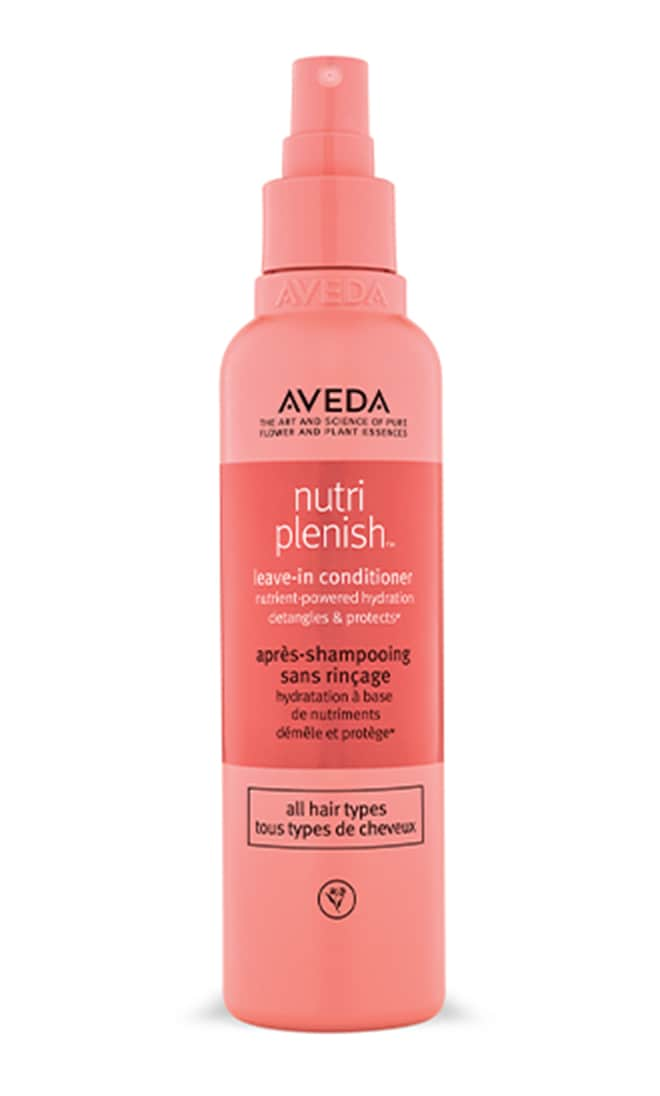
Moisture. Gray hair generally grows in coarser and drier, because the oil glands attached to each follicle slow down with age. Treat it like the driest hair you have ever had: condition every wash, a mask weekly, a leave-in on damp hair. Our full routine for silver is in the gray and silver hair guide.
Styling that breaks the line. A deeper side part, soft bend or wave through the mid-lengths, and texture at the root all scatter a horizontal demarcation line until it stops reading as a line at all. Flat-ironed, center-parted, one-length hair does the exact opposite.
What We Will Ask at Your Consultation
Come in with a reference photo if you have one, and expect these questions. They are the ones that decide the route:
- How much length are you willing to lose? This sets the calendar before anything else does.
- What is currently on your hair? Years of permanent box color behaves differently from salon demi-permanent, and henna changes the plan entirely.
- Roughly how gray are you, and where? Most people gray at the temples and part line first, which is useful — that is where blending does its most visible work.
- How often can you realistically come in? An eight-week client and a sixteen-week client get different plans, and the sixteen-week plan is not worse, just different.
- What is the deadline? A wedding, a reunion or a milestone birthday eighteen months out changes the sequencing.
Colored hair also needs a plan to leave gracefully. If your ends are dry or fragile from years of color, our hair and scalp treatments are usually part of the first appointment rather than an upsell at the end of it.
Three Things to Stop Doing
- Stop plucking the grays. The AAD is direct about it: "plucking hair can cause hair thinning, and the removed hair will grow back gray." You get the same gray hair and a thinner patch to put it in.
- Stop using purple shampoo daily. Once or twice a week. Over-toned silver goes flat and lavender, and the fix is a week of regular shampoo.
- Stop stretching your root touch-up to see what happens. If you are considering a transition, say so at your next appointment. Letting a permanent root grow out unmanaged is the one route that guarantees the hard line, and it is avoidable.
Start Your Transition in Plano
Bring us the question and we will give you the calendar before you commit to anything. A consultation is where the route gets decided — blending, cutting, glossing, or some combination — and you leave knowing what the next twelve months look like and what they cost.
You can read about our stylists before choosing one, see current rates on the pricing menu, or call us at (972) 378-0091 to talk it through. Book online any time. We are at 6101 Chapel Hill Blvd, Suite 103, Plano, TX 75093, open Tuesday through Friday 10 AM to 7 PM, Saturday 9 AM to 5 PM, and Sunday 10 AM to 5 PM, closed Monday.
Frequently Asked Questions
How long does it take to transition to gray hair? It depends entirely on how much colored length you are willing to cut off, not on how gray you are. Healthy hair grows about half an inch a month, so a chin-length bob with six inches of colored hair takes roughly a year to grow out completely, and shoulder-length hair takes closer to two. Most clients do not wait that long, because the colored ends come off gradually at regular trims. With a shorter cut and a blending plan, the transition usually stops looking like a transition somewhere between six and twelve months.
What is gray blending, and how is it different from gray coverage? Gray coverage uses permanent color to hide the gray completely, which means a defined regrowth line every four to six weeks. Gray blending does the opposite: your colorist weaves fine highlights and lowlights through the incoming silver so no line ever forms and the grow-out reads as dimension. Blending camouflages rather than erases, so if you want zero visible silver it is not the right service. If you are heading toward gray on purpose, it is usually the gentlest route there.
How much does transitioning to gray hair cost in Plano? At our Plano salon, the services a transition uses are partial highlights at $190 to $230, full highlights at $220 to $260, face-framing Illumination at $100 to $120, and a gloss or toner at $65 to $85, all depending on your stylist's level. A blending route typically means three or four foil appointments spread across a year with a gloss in between, while a cut-and-gloss route is a haircut at $93 to $112 every six to eight weeks plus a $65 to $85 gloss. Exact pricing comes out of your consultation.
Will my hair look bad while I grow out the gray? The part that looks unfinished is the demarcation line, not the gray itself, and the line is the part a colorist can do something about. Blending, a shorter cut, a deliberate part change and a gloss on the incoming silver all break up that hard horizontal edge. Clients who go cold turkey with long hair and no gloss are the ones who find the middle stretch hard, which is exactly why we rarely recommend doing it that way.
Should I cut my hair short to go gray faster? A shorter cut is the single biggest lever on the calendar, because the only thing standing between you and fully natural hair is colored length. Taking shoulder-length hair to a chin-length bob can cut a two-year transition roughly in half overnight. It is not the right answer for everyone, and plenty of clients transition at length with blending instead, but if finishing quickly matters more than keeping your length, the scissors beat any color service.
Why does my incoming gray hair look yellow instead of silver? White and silver hair has no pigment of its own to hide a stain, so hard water minerals, UV, hot tools and product buildup all show as a yellow cast. North Texas water is hard, which makes this a local problem more than a hair problem. A violet or blue toning shampoo once or twice a week plus a salon gloss every six to eight weeks keeps incoming silver reading bright rather than beige.
Book a Gray Transition ConsultationProducts for this
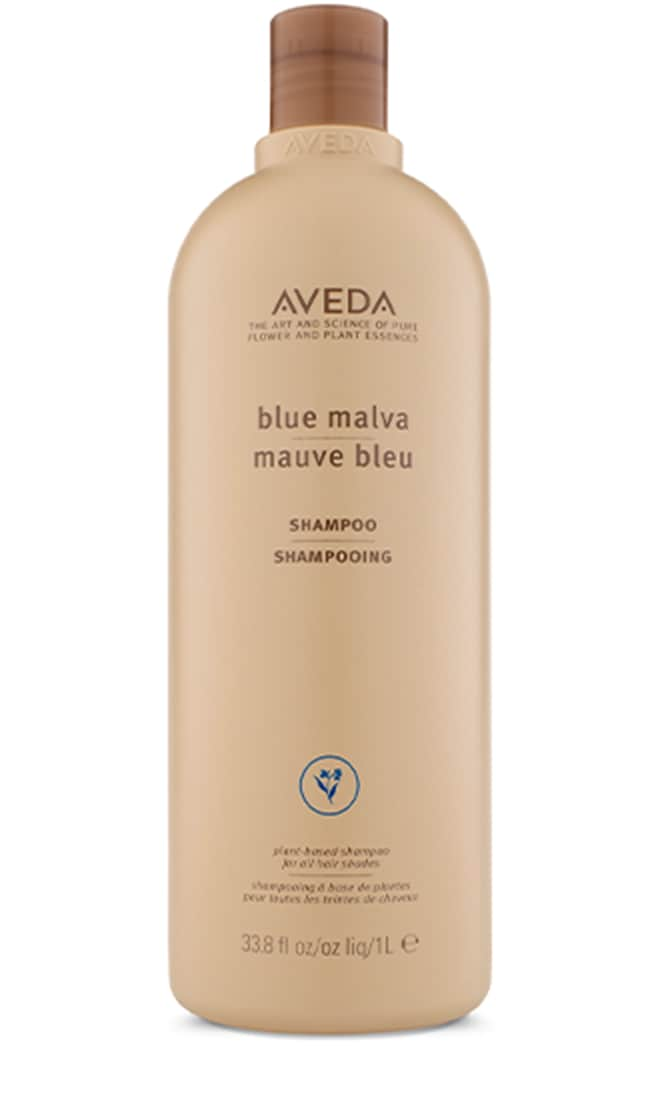
Blue Malva Color Shampoo for Silver and Blonde Tones
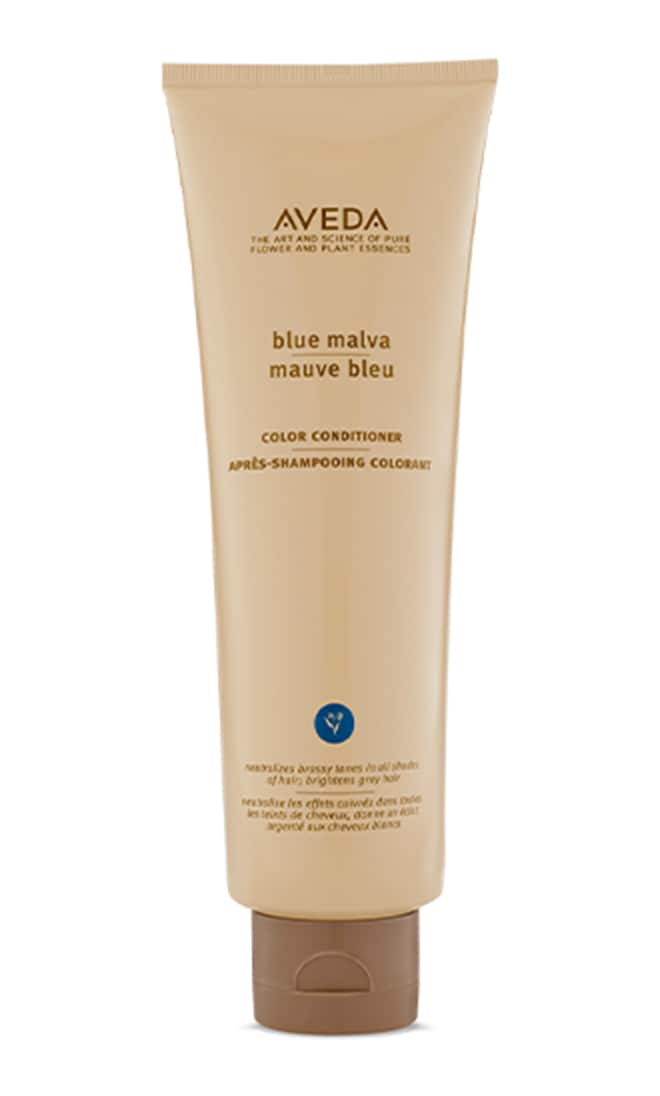
Blue Malva Color Conditioner for Silver and Blonde Tones
nutriplenish™
Nutriplenishtm Leave In Conditioner
miraculous oil
Miraculous Oil High Shine Hair Concentrate
Purchases made through these links support Lee Graves Salon through Aveda's A-Commerce program. Prices shown were checked on 2026-08-20; the current price always appears at aveda.com.
Ready to Get Started?
Book an appointment or call us for a personalized consultation.
Related Articles
Vivid Hair Color in Plano: Pastels, Jewel Tones, and What They Actually Take
What vivid and fashion hair color really involves in Plano — the lightening it needs, why it is priced by the hour ($100-$150/hr), how long each shade family lasts, and how to grow it out.
Balayage vs Highlights Cost: Which Is More Expensive?
Balayage vs highlights cost, with real Plano prices: what each costs per appointment, what each costs per year, and which one is actually cheaper for you.
Gray Coverage in Plano: Root Touch-Ups, Blending & Your Real Options
Full coverage, gray blending, or a gloss? What each option costs in Plano, how often you'll be back, and how to pick the right shade for gray hair.