Gray & Silver Hair Care: Keep It Bright, Soft & Yellow-Free
Why gray hair is coarser, drier, and quick to yellow, plus the toning, moisture, and gloss routine our Plano stylists use to keep silver bright.
Reviewed by our stylists · updated 2026-08-21
Gray hair isn't just your old hair minus the pigment. It's a different material. It's usually coarser, noticeably drier, and quick to pick up a yellow cast that reads dull instead of silver. Keeping it bright comes down to three habits: real moisture every week, a violet-or-blue toning product once or twice a week, and a salon gloss every couple of months. Here's why silver behaves the way it does, and the routine that keeps it looking deliberate.
Why Gray Hair Feels Coarser and Drier
When a follicle stops producing melanin, that's rarely the only change happening. The sebaceous glands attached to each follicle slow their oil production with age, so every strand grows out with less of its own built-in conditioner. At the same time, some follicles shift shape as they gray, sending out hair with a wirier, more irregular texture than what grew there before.
That's the double hit: less natural oil on a strand that's often rougher to begin with. Gray hair isn't automatically thicker, and a lot of what people call "coarse" is really a dry, ruffled cuticle that scatters light and refuses to lie down. That's good news, because dryness is fixable. Treat gray hair like the driest hair you've ever had and half the battle is won.
Why Silver Turns Yellow
White and silver hair is essentially a blank canvas, and a blank canvas shows every stain. Four culprits do most of the damage:
- Minerals. North Texas water is hard, and the iron and copper it carries deposit on hair and oxidize into a yellow-orange tint. It builds slowly, so you don't notice until your silver has gone beige.
- Heat. Hot tools run too hot will scorch pale hair the way an iron scorches a white shirt. Once heat has yellowed the keratin itself, no purple shampoo can pull it back out.
- UV. Sun exposure breaks down the proteins in hair and leaves a yellow cast behind, and a Texas summer supplies months of it.
- Buildup. Styling product residue, smoke, even some rich oils leave a film that goes dingy on white hair.
The chemistry here is a close cousin of why blonde hair turns brassy, with the same warm tones surfacing, just with no pigment left to camouflage them.
Blue and Purple Pigment, Explained
Toning is color-wheel math. Violet sits opposite yellow, so violet pigment cancels yellow. Blue sits opposite orange, so blue pigment cancels orange. Pure white hair usually pulls yellow and wants violet; gray hair that still has darker strands mixed in often reads warm-orange and does better with blue, or a blend of both.
That blend is exactly what a formula like blue malva color shampoo delivers, with a plant-derived blue-violet deposit that neutralizes brassiness and adds a silvery brightness in the shower. Use it in place of your regular shampoo once or twice a week, leave it in for a minute or two, and rinse thoroughly.
Because toning shampoos aren't built for softness, pair yours with a pigmented conditioner such as blue malva color conditioner, which tones and conditions in the same step, which is a smarter fit for gray hair that can't spare any moisture. One warning from the chair: more is not better. Porous white hair grabs pigment fast, and overdoing it turns bright silver into smoky lilac. If that happens, just switch to a regular shampoo for a week and it washes out. For the full story on how toning pigments work, our brass and toning guide goes deeper.
The Silver Moisture Routine
Tone control gets the attention, but moisture is what makes gray hair behave. The weekly rhythm we give clients:
- Wash two to three times a week, not daily. Your scalp is producing less oil than it used to, so stripping what little there is makes wiry hair wirier.
- Tone once or twice of those washes. The blue-violet wash-and-condition step above. Regular hydrating formulas the rest of the time.
- Deep condition weekly. A masque on damp hair, five to ten minutes, ears down. Coarse gray hair drinks this up.
- Leave-in on every wash day. A hydrating leave-in smooths the cuticle, cuts the halo of wiry flyaways, and preps hair for heat. Something like nutriplenish leave in conditioner does all three from one bottle on damp hair.
- Keep hot tools honest. Moderate temperatures, always on protected hair. Scorched-in yellow is permanent; there's no product on any shelf that reverses it.
Silver hair also reflects light differently than pigmented hair, because its surface is rougher, so it goes matte easily. A couple of drops of a lightweight finisher like miraculous oil high shine hair concentrate pressed over dry lengths brings back the gleam that makes gray read as polished silver instead of gone-gray. Light hand, ends first, no roots.
Silver-Enhancing Gloss Services
The single biggest upgrade for gray hair isn't in your shower. It's a gloss at the salon. A silver-enhancing gloss is a demi-permanent, translucent tone applied at the shampoo bowl: no lightener, no line of demarcation, about twenty minutes. It cancels yellow more evenly than any at-home product, softens the contrast between white and steel strands, and seals the cuticle so hair shines and combs smoother for weeks. It fades gradually over six to eight weeks, which makes it easy to schedule with your regular cut. We've written before about how maintenance toners work, and a silver gloss is the same service tuned for gray.
Growing Out Gray Gracefully
If you're transitioning away from years of color, the enemy is the hard line where dyed hair ends and natural gray begins. You have options:
| Strategy | Best for | What to expect |
|---|---|---|
| Gray blending (highlights + lowlights) | Most clients, especially longer hair | Fine weaves erase the line; looks intentional at every stage |
| Shorter cut | Anyone open to a change | Less colored length to grow off; fastest total timeline |
| Cold turkey + gloss | Patient clients, shorter hair | A visible line for a while, but glosses keep incoming silver bright |
Blending is the route we recommend most: your colorist weaves highlights and lowlights around the incoming silver so the grow-out reads as dimension rather than roots. And give yourself some grace, because going gray is a genuine transformation, and like any big hair change, the hardest part is deciding to start. Still deciding whether to grow it out or cover it? Our guide to gray coverage options in Plano lays the two paths side by side with the real upkeep and cost of each.
Mistakes That Dull Silver
- Purple shampoo every wash. Over-toned silver goes flat and lilac. Once or twice a week.
- Skipping conditioner because hair feels "coarse, not dry." Coarse gray hair is dry hair. Condition every single wash.
- Letting mineral buildup ride. A clarifying or chelating cleanse every few weeks keeps hard-water yellow from settling in.
- Flat irons on high. Heat-yellowed white hair cannot be toned back. Keep temperatures moderate and hair protected.
- No sun protection. A hat or UV-protective leave-in through the Texas summer saves you months of toning.
Silver that's cared for doesn't read as "letting yourself go gray." It reads as a color choice, because it is one. If your gray is somewhere between growing in and grown out, or your silver has gone yellow and flat, sit down with one of our stylists: a gloss and a blending plan at your next visit can move you from in-between to intentional in a single appointment.
What we recommend from Aveda
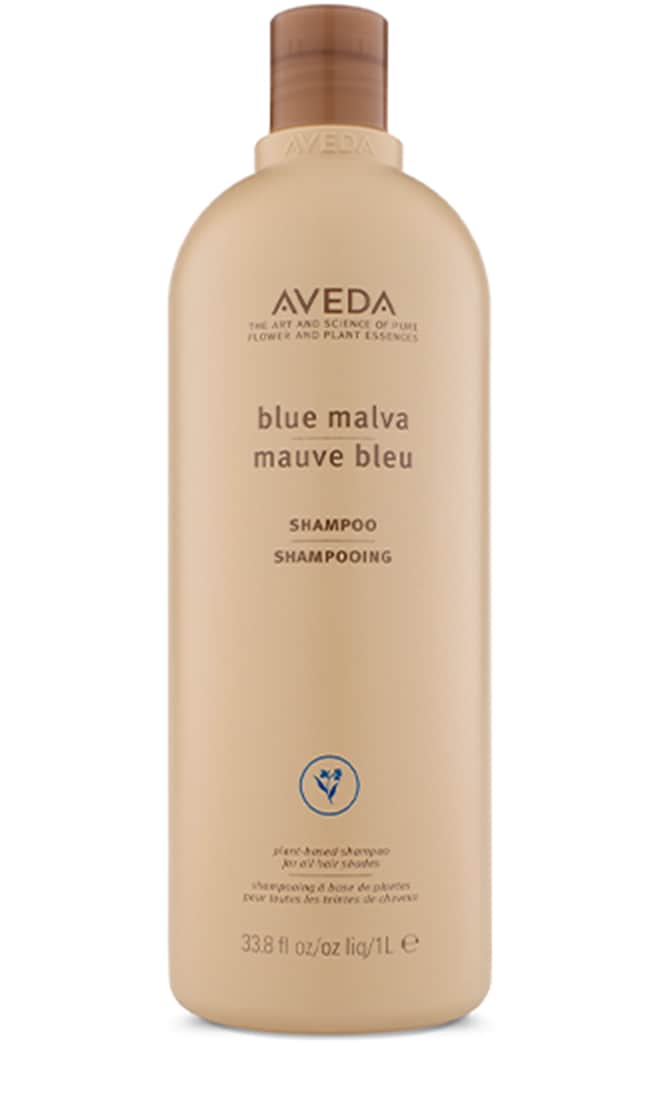
Blue Malva Color Shampoo for Silver and Blonde Tones
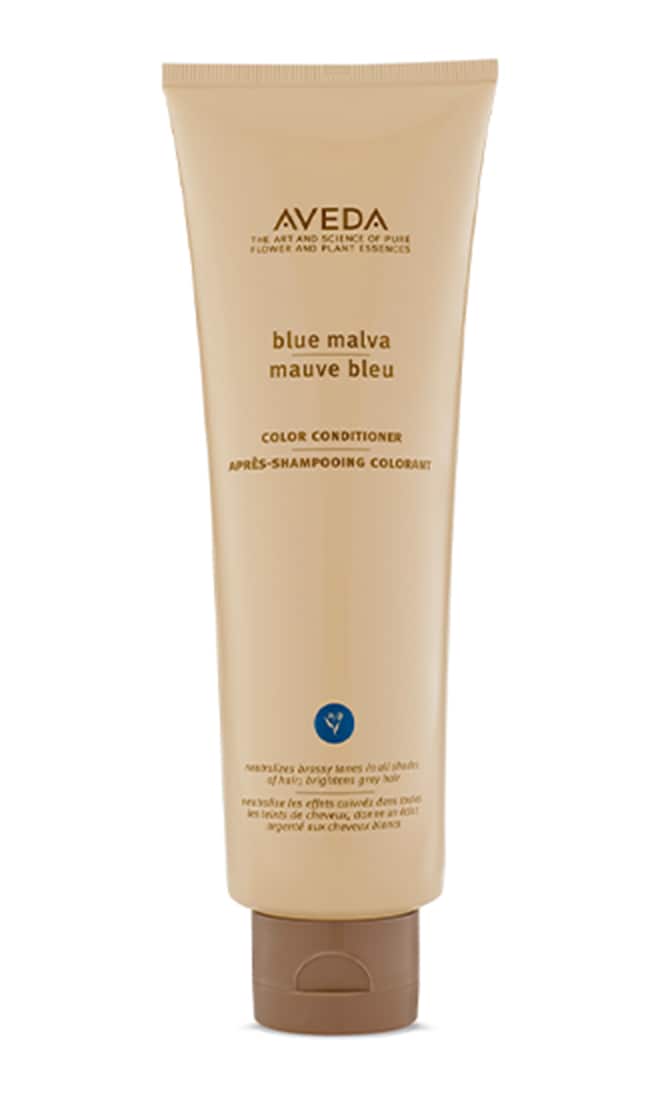
Blue Malva Color Conditioner for Silver and Blonde Tones
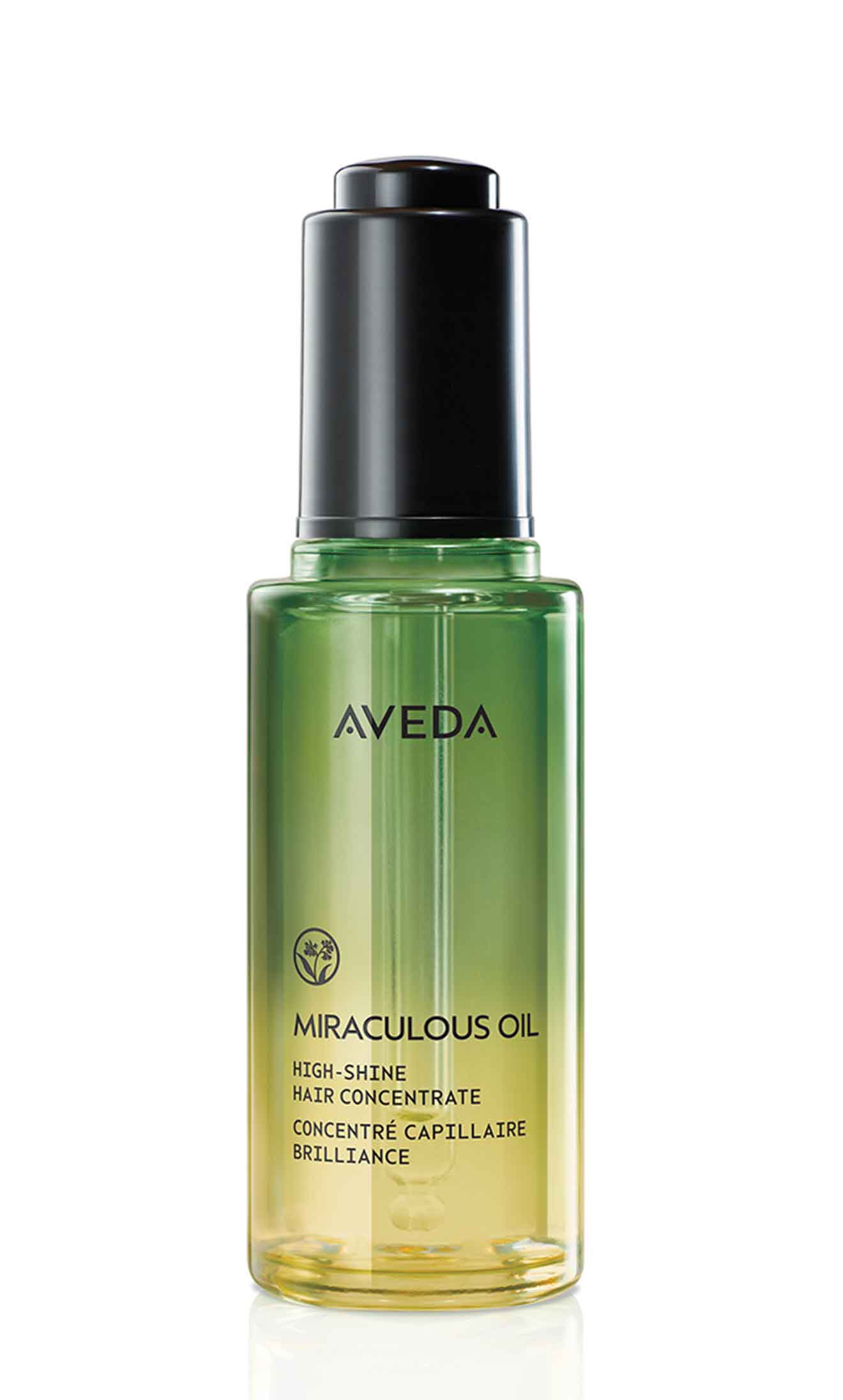
miraculous oil
Miraculous Oil High Shine Hair Concentrate
Purchases made through these links support Lee Graves Salon through Aveda's A-Commerce program. Prices shown were checked on 2026-08-20; the current price always appears at aveda.com.
Common questions
Why does gray hair turn yellow?
Minerals in hard water, UV exposure, high heat from hot tools, and residue from styling products all leave a yellowish cast on hair, and because gray hair has no pigment of its own to hide it, the yellow shows. The fix works from both ends: remove the causes with a chelating cleanse, heat protection, and a hat, then cancel what's left with violet or blue pigmented products or a salon gloss.
How often should I use purple or blue shampoo on gray hair?
Once or twice a week is plenty for most gray and silver hair. White hair is often porous and grabs pigment quickly, so daily use can tip bright silver into a smoky lavender. Start with a short leave-in time of a minute or two, and build up only if yellow persists. On your other wash days, use a hydrating shampoo, because toning formulas alone won't give coarse gray hair the moisture it needs.
Why is my gray hair so dry and wiry?
Two age-related changes hit at once. The oil glands attached to each follicle slow down, so every strand gets less natural conditioning than it used to. And many follicles change shape as they stop producing pigment, sending out hair with a coarser, more irregular texture. Gray hair isn't necessarily thicker. It just behaves that way. Consistent conditioning, a leave-in, and a weekly masque soften the wire noticeably within a few weeks.
What is a silver gloss, and how long does it last?
A silver gloss is a demi-permanent, ammonia-free color service applied at the shampoo bowl. It deposits a translucent veil of cool violet-blue tone that cancels yellow, evens out the mix of white and steel strands, and adds real shine to hair that's gone matte. There's no lightener and no commitment, and it fades gradually over roughly six to eight weeks. Most clients pair one with their regular haircut appointment.
What's the easiest way to grow out my gray?
For most clients, gray blending is the gentlest route: fine highlights and lowlights woven around the incoming silver so the demarcation line disappears and the grow-out looks intentional at every stage. A shorter cut speeds up the calendar since there's simply less colored length to remove. Going cold turkey works too, and a gloss keeps the incoming gray bright while the old color grows down and gets trimmed away.
Want this dialed in for your hair specifically?
Book with us in Plano at (972) 378-0091 and leave with a routine that fits your hair, your schedule and your budget.