Hand-Tied vs Tape-In Extensions: The Complete Guide
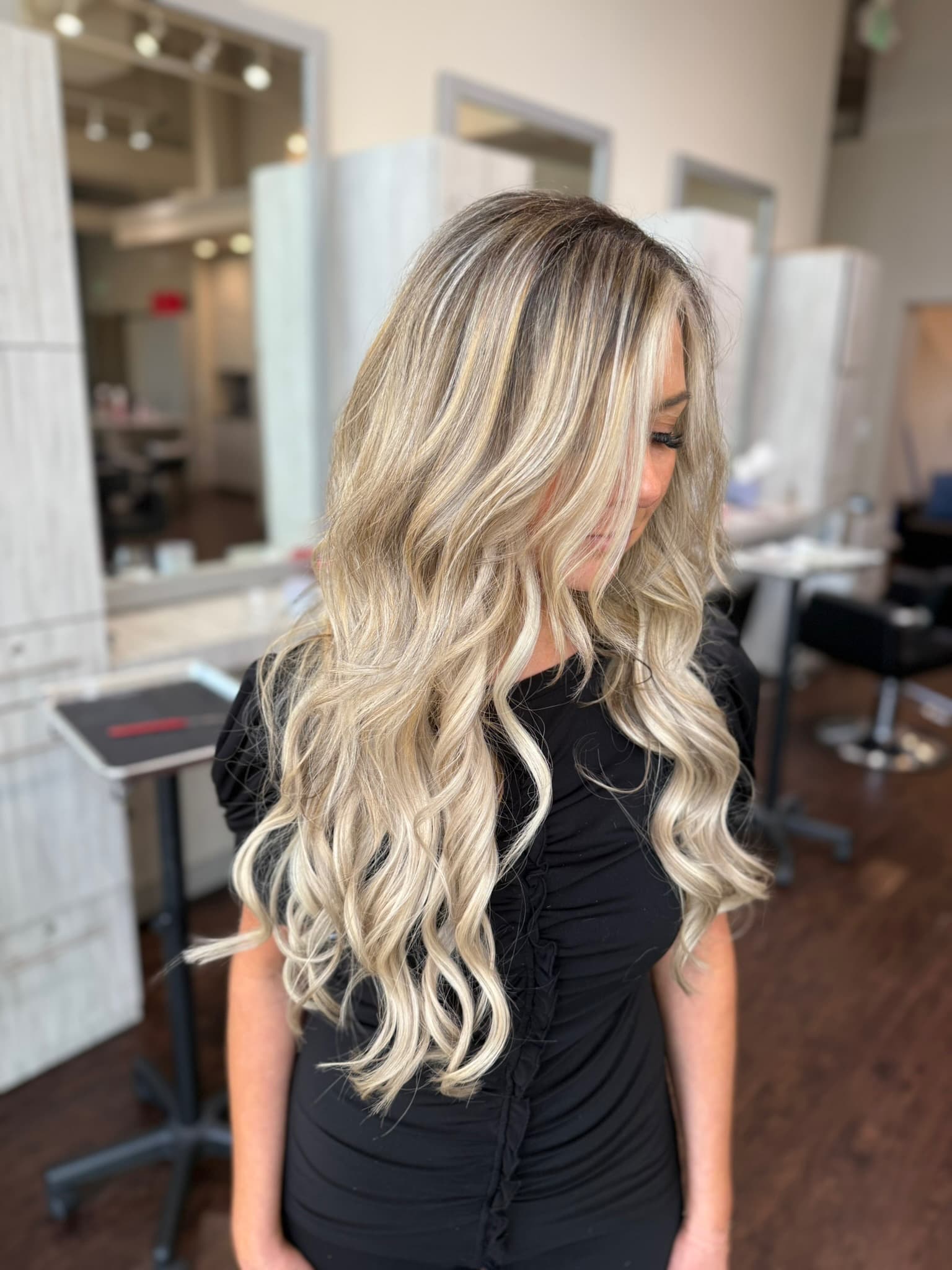
Choosing the right extension method is just as important as choosing the right color or length. The two most popular professional methods, hand-tied and tape-in, each have distinct advantages. Here's everything you need to know to make the right choice.
How Hand-Tied Extensions Work
Hand-tied extensions use thin wefts of hair that are sewn by hand onto a beaded row installed close to your scalp. The process involves:
- Creating the foundation: Your stylist sections your hair and creates small anchor points using tiny beads threaded onto a thin wire
- Attaching the wefts: Hand-sewn wefts are tied to the beaded row, lying flat against your head
- Blending and cutting: The extensions are cut and blended to match your desired style
The result is an incredibly flat, lightweight installation that's virtually undetectable, even in updos and ponytails.
How Tape-In Extensions Work
Tape-in extensions use pre-taped wefts that are sandwiched around thin sections of your natural hair. The process involves:
- Sectioning: Your stylist creates clean horizontal sections
- Application: A tape weft is placed above and below each section, sandwiching your natural hair between two adhesive strips
- Pressing and setting: The wefts are pressed together to form a secure bond
- Blending: Extensions are cut and styled to match
Tape-ins are quicker to install and can be a great entry point into the world of extensions.
Comparison: Hand-Tied vs Tape-In
| Factor | Hand-Tied | Tape-In |
|---|---|---|
| Installation time | 2–4 hours | 1–2 hours |
| How it attaches | Sewn to beaded row | Adhesive tape sandwiching hair |
| Profile/thickness | Extremely flat | Slightly thicker at attachment |
| Comfort | Very lightweight, minimal tension | Lightweight, some clients feel the tape |
| Versatility | Updos, ponytails, any style | Some styling limitations near roots |
| Maintenance visits | Every 6–8 weeks (move-up) | Every 6–8 weeks (removal + reinstall) |
| Hair reuse | 9–12 months | 2–3 applications |
| Impact on natural hair | Very gentle when done properly | Gentle, but adhesive requires care |
| Best for | All hair types, especially fine hair | Thicker hair, extension newcomers |
Which Is Better for Fine Hair?
If you have fine or thin hair, hand-tied extensions are generally the better choice. Here's why:
- Less tension: The beaded row distributes weight across a wider area
- Flatter profile: No tape bulk means extensions blend seamlessly with fine hair
- More secure: Beaded rows don't slip the way tape can on fine, silky hair
- Customizable placement: Your stylist can position wefts precisely where you need volume most
Tape-ins can work on fine hair, but the adhesive needs something to grip. Very fine or silky hair types may find that tape-ins slip more easily.
Which Is Better for Thick Hair?
Thick hair works well with both methods. Tape-ins are often a great choice for thick hair because:
- The adhesive grips securely to thick strands
- Installation is faster (and thick hair may need more wefts)
- The slightly thicker attachment point is easily hidden in abundant hair
That said, many thick-haired clients still prefer hand-tied for the superior comfort and styling versatility.
Maintenance: What to Expect
Hand-Tied Maintenance
- Move-up appointments: Every 6–8 weeks, your stylist moves the beaded row up as your hair grows
- The same wefts are reused: no new hair purchase at each appointment
- Hair can last 9–12 months before needing replacement
- At-home care: Brush with a loop brush, avoid heavy products near the row, sleep in a loose braid
Tape-In Maintenance
- Removal and reinstall: Every 6–8 weeks, the tape strips are removed, residue is cleaned, new tape is applied, and the wefts are reinstalled
- Hair can be reused 2–3 times before replacement
- At-home care: Avoid oil-based products near the tape, brush carefully, don't pull on the bonds
Cost Comparison
While specific pricing varies based on how much hair you need, here's how the cost structures differ:
Hand-tied extensions have a higher upfront cost but lower long-term cost:
- Higher initial installation investment
- Move-up appointments are typically less expensive than tape-in reinstalls
- Hair lasts longer (9–12 months vs 2–3 uses for tape-in), so you buy hair less often
Tape-in extensions have a lower entry point but more frequent hair replacement:
- Lower initial installation cost
- Need new tape at every maintenance appointment
- Hair needs replacement more frequently
Over a 12-month period, the total investment often comes out similar between the two methods.
Making Your Decision
Choose hand-tied if you:
- Want the most natural, undetectable result
- Have fine or thin hair
- Style your hair in updos and ponytails frequently
- Prefer longer-lasting hair that gets reused
- Want the flattest, most comfortable option
Choose tape-in if you:
- Want a lower initial investment to try extensions
- Have thick hair that holds tape well
- Prefer faster installation appointments
- Wear your hair down most of the time
- Want an easier first-time extension experience
Our Recommendation
At Lee Graves Salon, we specialize in hand-tied extensions because we believe they deliver the best results for the widest range of clients. The comfort, longevity, and natural appearance are unmatched.
That said, the right method depends on your hair, your lifestyle, and your goals. That's exactly what we discuss during your complimentary consultation, so you never have to guess.
Frequently Asked Questions
Can I switch from tape-ins to hand-tied? Yes, absolutely. Many clients start with tape-ins and later transition to hand-tied once they've experienced extensions and want to upgrade. Your stylist will assess your hair and plan the transition.
How do I wash my hair with extensions? Wash gently, focusing shampoo on your scalp and letting it rinse through the lengths. Condition the mid-lengths and ends only. Avoid scrubbing near the attachment points. Pat dry rather than rubbing.
Can I color my hair with extensions installed? Root touch-ups can be done with extensions in place. For major color changes, it's best to do the color before installation so the extensions can be perfectly matched.
Will anyone be able to tell I have extensions? With professional hand-tied extensions, the answer is almost always no. The wefts lie flat, the blending is seamless, and even updos and ponytails look natural.
Go Deeper on Each Method
Each method now has its own full guide:
- Hand-tied (beaded weft) extensions — who they suit, the install, and what they cost
- Tape-in extensions — cost, care rules and re-taping
- Keratin bond (K-tip) extensions — the third method, and where it beats both of the above
- Which method is best for fine hair? — a direct comparison for fine and thinning hair
Not sure which is right for you? The extension consultation is complimentary — call (972) 378-0091 or book online.
Products for this
cherry almond
Cherry Almond Softening Shampoo
cherry almond
Cherry Almond Softening Leave In Conditioner
cherry almond
Cherry Almond Softening Conditioner
Purchases made through these links support Lee Graves Salon through Aveda's A-Commerce program. Prices shown were checked on 2026-08-20; the current price always appears at aveda.com.
Ready to Get Started?
Book an appointment or call us for a personalized consultation.
Related Articles
How Much Do Hair Extensions Cost in Dallas?
What hair extensions cost in the Dallas area: hand-tied from $1,500, tape-in from $800, move-ups from $350, and what the first year really adds up to once maintenance is included.
How Often Do Hair Extensions Need Maintenance?
Hand-tied every 6-8 weeks, tape-in every 6-8 weeks, keratin bond every 3-4 months. Why the schedule exists, what happens at the appointment, and what going late actually costs you.
Hand-Tied vs Tape-In vs Keratin Bond: Which Is Best for Fine Hair?
A method-by-method comparison for fine and thinning hair: how each attachment distributes weight, which shows through, and what we actually recommend at consultation.